> For the complete documentation index, see [llms.txt](https://docs.infrastructure.finance/llms.txt). Markdown versions of documentation pages are available by appending `.md` to page URLs; this page is available as [Markdown](https://docs.infrastructure.finance/fundamentals/why-dawn-exists.md).

# Why DAWN Exists

**TLDR:**

* The internet’s protocol stack (TCP/IP era) was designed around wired, enclosed media and centralized trust assumptions—great for fiber/copper, but strained by what wireless is becoming.
* Wireless is the future because it’s cheaper + faster to deploy, enabling lots of small/local operators to build coverage incrementally.
* But wireless runs over an open, unenclosed medium (shared airwaves), which creates hard problems: interference, spectrum scarcity, variable performance, and coordination at scale.
* As more “random” participants can deploy nodes, trust becomes the bottleneck: you need a way to verify identity, performance, and network state in the real world without relying on one central authority.
* DAWN’s thesis: we now need a new protocol suite that combines wireless reach with on-chain verification and software-defined routing to form a trustless physical internetwork.

## **Why a new protocol suite is required in a wireless world**

As data consumption soars, so do demands for scale and flexibility. Meanwhile, wireless innovations, blockchain technologies, and software-driven networking are exposing the limits of existing protocols. These trends underscore the need for a trustless, physical internetwork that integrates wireless reach with on-chain verification and agile, software-based routing. To appreciate why this shift is so critical, let’s revisit the historical architectures that first connected the world.

## **Learning from the Past: The Evolution of Network Architectures**

To design the networks of tomorrow, we must first understand the evolution of today's Internet. Its roots lie in phone-based networks that reflected the engineering constraints of their time. As demand grew, these systems evolved, implementing new protocols to overcome these limitations and better serve an expanding range of applications. By understanding how these protocols were a reflection of their time, we can gain proper insight into the design challenges and opportunities for creating a new protocol of the Internet of the future.

## **From Circuit-Switched Beginnings...**

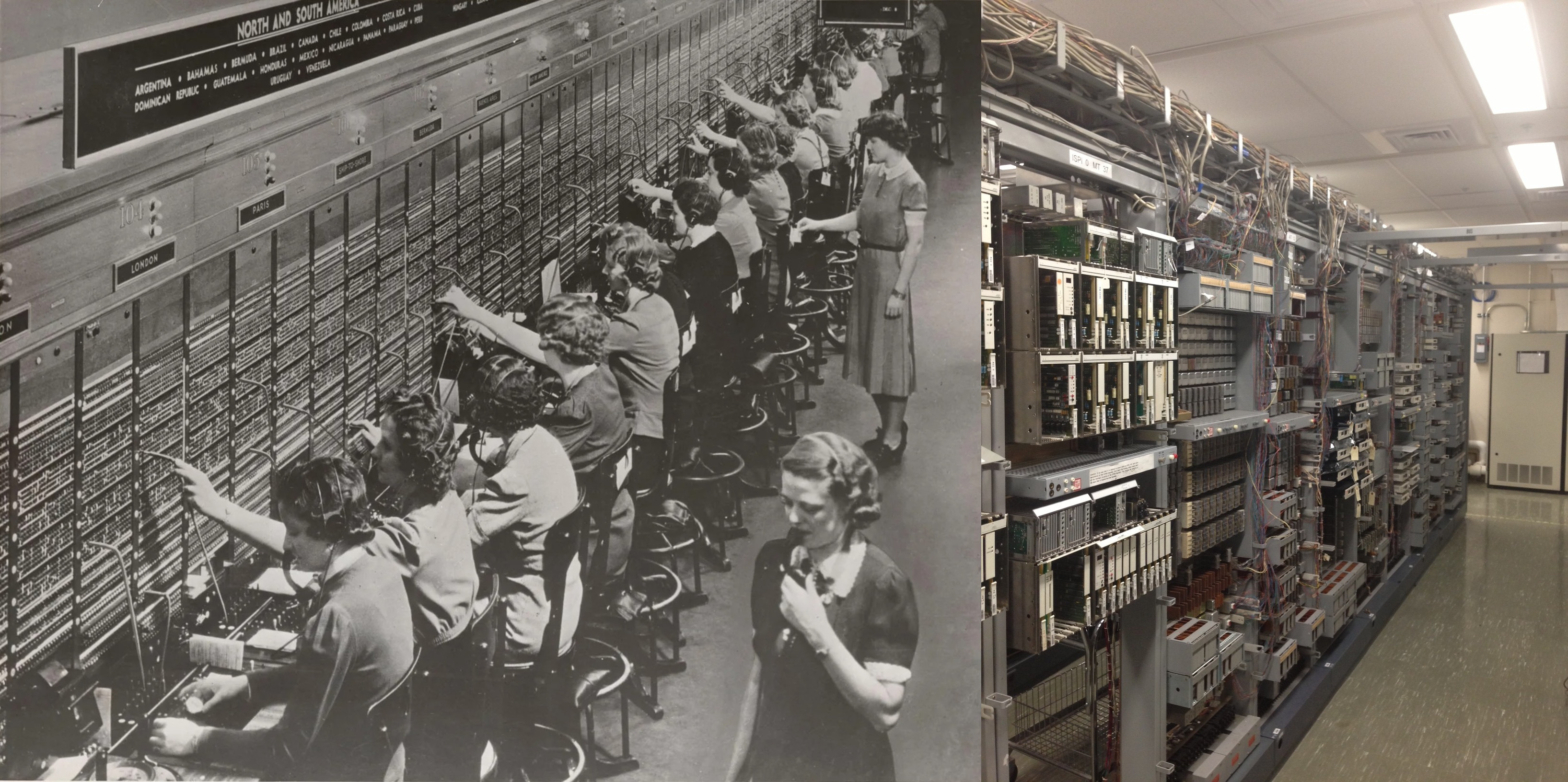
In the early days of telecommunications, networks operated on a circuit-switched model that depended entirely on human intervention to establish connections. At telephone switchboards, dedicated operators—often women—physically connected calls using a complex array of cords and jacks. This manual process, while effective for its time, was labor intensive and inherently limited; every call required direct human action, and the system's scalability was constrained by the number of available operators.

<figure><img src="https://593500218-files.gitbook.io/~/files/v0/b/gitbook-x-prod.appspot.com/o/spaces%2Fmj2D1HjrTLSdWQrQyxfE%2Fuploads%2FBWDG6wHe655DSu8WnFR1%2Fimgonline-com-ua-twotoone-jlX9l0LEuOI80uCI.jpg?alt=media&amp;token=a5688458-849a-4161-91e2-4d27f75c165e" alt=""><figcaption><p><em>The original routers and what replaced them.</em> <br><em>Left: Women operating a Bell System telephone switchboard, manually connecting calls in the era of circuit switching.</em><br><em>Right: The Number One Electronic Switching System (1ESS), a revolutionary achievement that automated call routing and paved the way for modern telecommunications.</em></p></figcaption></figure>

As demand grew, the limitations of this system became increasingly apparent. The transition toward automation began with breakthroughs like the Number One Electronic Switching System (1ESS). The 1ESS replaced manual switching with electronic controls, automating the call-routing process and dramatically improving speed, reliability, and capacity. This technological leap not only streamlined operations but also set the stage for future innovations that would transform global communications.

### **... To Packet-Switched Hyperscale**

As telecommunications grew, it quickly became clear that the limitations of circuit-switched networks were unsustainable for an era of rapid expansion and diverse communication needs. Dedicated circuits—while reliable—required an exclusive use of the physical medium for the duration of a connection, which meant that the available capacity could only be utilized by one call at a time. This approach simply did not scale in a world where the demand for connectivity was exploding.

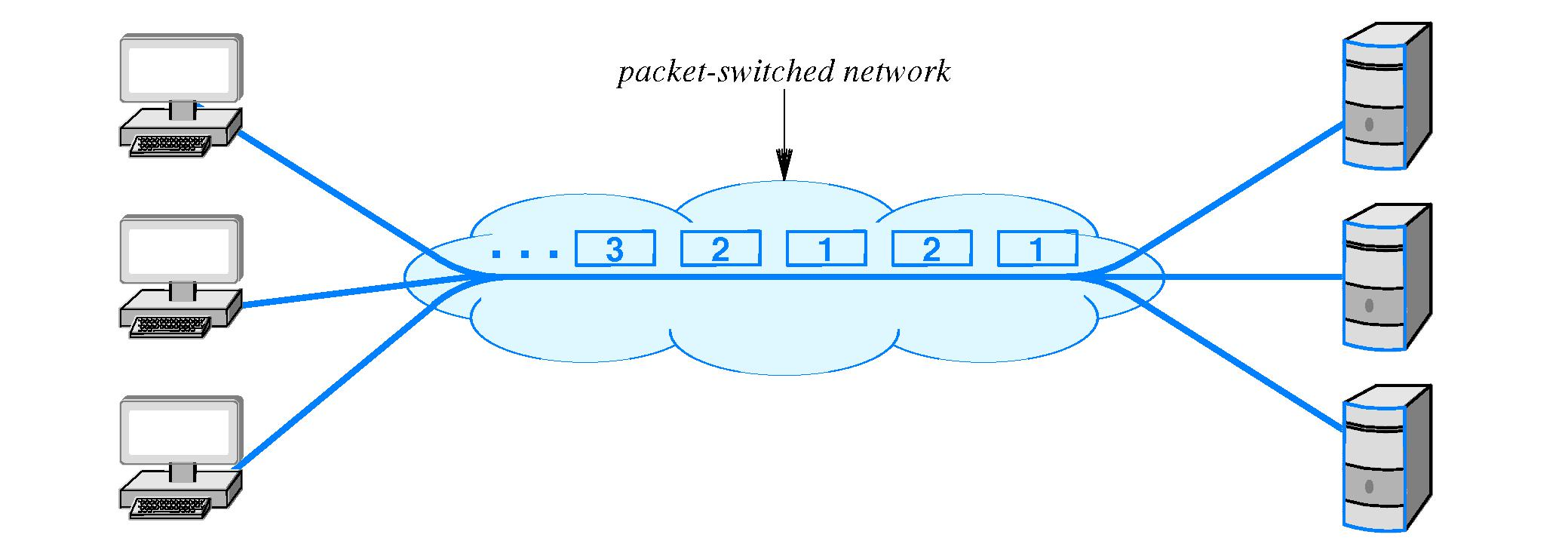
The solution was to share the same physical medium among many users. This led to the concept of packet switching: instead of maintaining a constant, dedicated circuit for each communication, data would be divided into discrete, self-contained packets. Each packet contains enough information—such as its destination, source, and sequencing—to navigate independently across the network. Packet switching was an efficient way of interleaving data flows so that many connections can simultaneously share the same transmission infrastructure.

<figure><img src="https://593500218-files.gitbook.io/~/files/v0/b/gitbook-x-prod.appspot.com/o/spaces%2Fmj2D1HjrTLSdWQrQyxfE%2Fuploads%2Fnv2XfIVW7PN4Vg5hXTbj%2Fpacket-switched-network.png?alt=media&amp;token=b3ec453c-6562-4080-89c6-77752e53af5a" alt=""><figcaption><p>Sharing a medium across several different connections.<br><em>This illustration depicts three end-to-end connections sharing a common transmission medium (e.g. physical wire). Discrete data packets allow the utilization of the shared medium, highlighting the key efficiency of packet switching— enabling multiple independent dataflows to coexist.</em></p></figcaption></figure>

The genius of this approach lies in its flexibility. Packets can traverse different routes through the network, adapting to congestion or failures in real time and reassembling at their destination to recreate the original message. This decentralized, dynamic method of data transmission became the backbone of the modern Internet, supporting the exponential growth in device connectivity and data traffic. By enabling efficient utilization of shared media, packet switching set the stage for the hyperscale of today's Internet, where tens of billions of devices interconnect seamlessly, powering everything from web browsing to cloud computing.

***Takeaway: to power this radical shift, scientists and engineers created TCP/IP—the foundational suite of protocols that propelled us from an unscalable circuit-switched model to the hyper-scalable world of packet-switched networking.***

## **The Wireless Revolution: Opportunities and New Challenges**

As the previous section illustrates, the Internet’s growth has relied heavily on phone-based systems which were primarily built on wired mediums. It doesn't matter whether it's copper or fiber, similar mental models still apply. However with wireless technologies now reaching the performance levels of fiber connections, at significantly cheaper costs, it’s crucial to reassess the implications of running large-scale networks over open, shared airwaves.

## **The Promise of Wireless: Lower Cost and Faster Deployment**

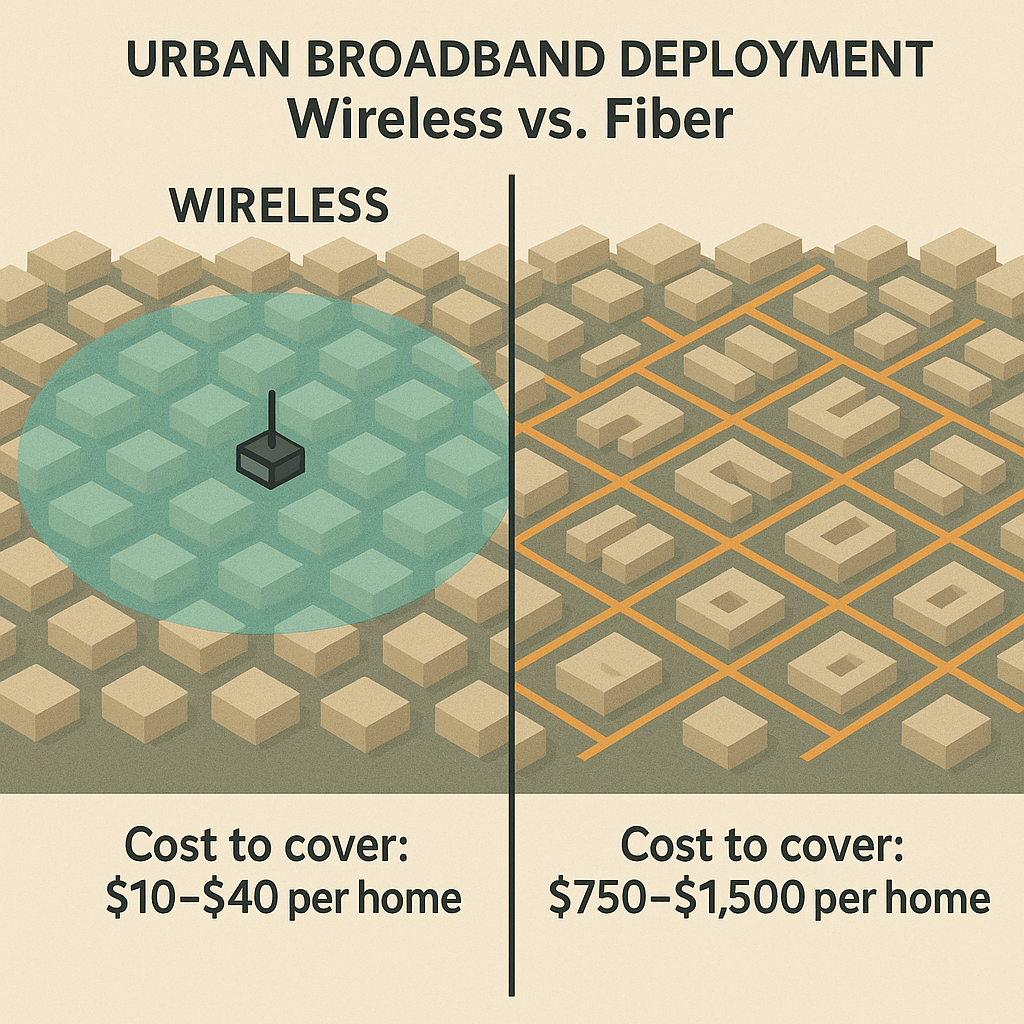
The defining advantage of wireless infrastructure lies in its affordability and ease of deployment compared to wired networks. Where fiber rings and cable installations require significant capital expenditures and months of construction, a single wireless access point (AP) can deliver coverage to a radius of users at a fraction of the cost. This more forgiving cost curve allows for smaller, incremental investments—an individual or a local community can deploy a single AP profitably, whereas laying dedicated fiber lines for even a few neighbors is prohibitively expensive.

## **A Path to Broader Connectivity**

As wireless equipment continues to improve (e.g., with technologies like Wi-Fi 7, 6G, and point-to-multipoint radio solutions), the barrier to entry for network operators plummets. This shift encourages local innovation and competition, with smaller stakeholders able to provide coverage in areas where large incumbents either can’t or won’t invest. In regions with limited infrastructure, wireless links can deliver crucial connectivity, bridging digital divides far more rapidly than wired alternatives.

<div align="center" data-full-width="false"><figure><img src="https://593500218-files.gitbook.io/~/files/v0/b/gitbook-x-prod.appspot.com/o/spaces%2Fmj2D1HjrTLSdWQrQyxfE%2Fuploads%2Fp6tPOAP2rJIPWy3eT4OX%2F123105eb-69f3-4069-98ee-c9b7af2de335.png?alt=media&amp;token=478c1b5b-a4f5-492a-acfe-5291c8af7d39" alt="" width="563"><figcaption><p>This side-by-side highlights the drastically different capital outlays for broadband coverage<br> in dense urban areas. A single wireless AP can serve for kilometers, deployed in an afternoon. <br>In contrast, a fiber network may cost $750–$1,500 per home  for outside plant alone—<br>plus an additional $200–$500 per unit for in-building wiring—often taking months of construction. <br>This stark difference in both cost and deployment speed underscores why wireless will win.</p></figcaption></figure></div>

***Takeaway: Wireless is too cost-effective to not be the future.***&#x20;

## **The Unenclosed Medium: Complexities and Pitfalls**

In telecommunications, the *medium* refers to the physical means by which signals are transmitted. Traditionally, wired networks rely on **enclosed** media—like copper cables or fiber optics—where signals are trapped and enclosed away from the outside world. The wiring provides a clean communication channel, and gives operators near-complete control over signal quality and security.

By contrast, **wireless** networks use **unenclosed** media: radio waves propagated through open air. Because these signals travel without physical containment, they are vulnerable to interference from environmental factors, other wireless signals, and even obstacles like walls or foliage. This openness can democratize access—anyone with the right equipment can attempt to transmit or receive—but it also presents unique challenges in managing interference, trust, and reliable connectivity.

## **Spectrum Scarcity and Interference**

In wireless communications, **spectrum** refers to the range of electromagnetic frequencies used to transmit signals—imagine it as lanes on a highway, with each lane representing a specific frequency band. Devices travel (transmit) within these lanes to avoid colliding with each other’s signals, but unlike physical roads that can be expanded, the radio frequency “highway” is constrained by physics and regulatory assignments.

Because these lanes are finite, multiple transmissions can collide or overlap, causing **interference** and degrading everyone’s performance. Regulatory bodies like the FCC try to manage this scarcity by auctioning off certain lanes (licensed bands) and reserving others for public use (unlicensed bands). Yet with growing demand, especially in dense urban environments, these shared lanes can quickly become overcrowded—highlighting the urgent need for mechanisms that dynamically coordinate usage and resolve conflicts without depending solely on centralized authorities.

## **Trust Issues**

Wireless infrastructure’s lowered barrier to entry means that practically anyone can set up a broadcasting node with relative ease and minimal cost. While this openness fuels interconnection (and competition as a result), it also amplifies the challenge of trust—once random participants can join and interconnect, ensuring network state is enforced in the real world becomes critical.

At present, trust is largely maintained by **centralized certificate authorities**, which validate device identities and manage access credentials for wireless networks. Additionally, existing solutions—like WPA for Wi-Fi—are designed for **localized** networks rather than a cohesive, large-scale wireless internetwork spanning multiple providers.&#x20;

***Takeaway: Wireless makes trust more important than ever.***