# Introduction
DAWN is an RWA (Real-World Asset) protocol for tokenizing the infrastructure that powers AI. The USD.infra Vault brings those assets on-chain at scale, pairing contracted AI infrastructure projects with a vault that finances their buildout. This guide walks through what DAWN is, how the USD.infra Vault works, and how capital, projects, and cashflows fit together.
## **DAWN**
The DAWN protocol is an RWA protocol for AI infrastructure: a way for operators to borrow capital and deploy compute and connectivity infrastructure, as well as for Vault participants to participate in the yield from these projects. It pairs contracted infrastructure projects with a vault ([USD.infra Vault](/usd.infra-vault/usd.infra-vault-overview)) that finances them using on-chain capital.
To understand the thesis behind DAWN, start with [What is DAWN](/fundamentals/what-is-dawn), then [Origin Story and Why Now](/fundamentals/origin-story-and-why-now).
## **Participate in the USD.infra Vault**
The USD.infra Vault routes stablecoin capital into AI infrastructure projects through a vault, and returns contracted cashflows back to participants through a token called sUSD.infra. Participation is limited to eligible non-U.S. persons and is subject to transfer restrictions.
## **Get financing**
DAWN provides project financing to operators of AI infrastructure with contracted revenue. Learn more on [Get Financing](/build/get-financing).
To participate, start with the [USD.infra Vault Overview](/usd.infra-vault/usd.infra-vault-overview), then [Core Primitives (USD.infra and sUSD.infra)](/usd.infra-vault/core-primitives-usd.infra-and-susd.infra), [How the USD.infra Vault Works](/usd.infra-vault/how-the-usd.infra-vault-works), and [Participate in the USD.infra Vault](/usd.infra-vault/participate-in-the-usd.infra-vault). To understand the reward layer: [Points: Bytes Season 1](/usd.infra-vault/points-bytes-season-1).
# USD.infra Vault Overview
**TLDR:**
* The USD.infra Vault is on-chain project finance for AI infrastructure assets. It's a vault that routes a stablecoin, USD.infra, into real-world assets (RWA), specifically AI infrastructure projects. Contracted revenue from AI infrastructure payments then provides yield into the vault.
* Flow: stablecoins → mint/receive USD.infra → deposit into the USD.infra Vault → receive sUSD.infra → vault deploys capital into SPVs and reserve assets → revenue provides yield back to the vault → sUSD.infra reflects vault performance through exchange rate → redeem at exchange rate from the liquidity sleeve, or sell on a DEX at market price (subject to eligibility, verification, and transfer restrictions).
* Key idea: Stable money in → infrastructure financed → cashflows back → vault performance is reflected in sUSD.infra exchange rate.
* Exit: Eligible holders can redeem sUSD.infra for USD.infra at the published exchange rate, subject to verification, a dynamic exit fee, and the Vault's liquidity-management rules.
## **What the USD.infra Vault is**
The USD.infra Vault is an on-chain DeFi vault for financing AI infrastructure assets of the future: turning long-term cash-flowing AI infrastructure into liquid, financeable, on-chain assets. It uses on-chain capital deposited into it to fund real AI infrastructure and returns contracted revenues from those assets into the vault as yield.
USD.infra Vault participation is limited to eligible non-U.S. persons and is subject to transfer restrictions and applicable eligibility requirements.
## **The Problem that the USD.infra Vault Solves**
AI is driving the largest infrastructure build-out in a generation. Close to $7 trillion is expected to go into global data center development by 2030, and everything that supports those data centers has to grow with them: networks, compute, caches, and power.
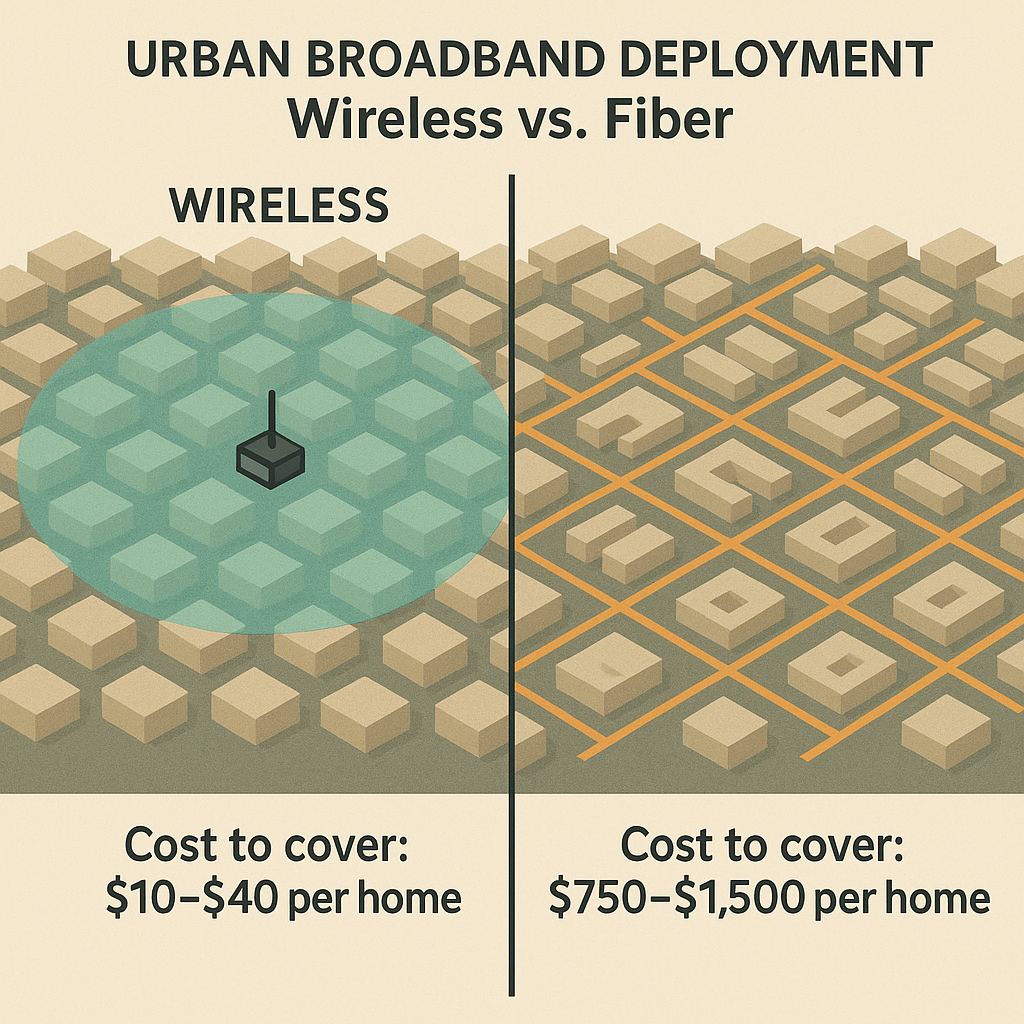
At the same time, that infrastructure is getting smaller and more distributed. Micro-neoclouds and fixed wireless, like solar panels before them, are examples of infrastructure technology getting smaller, more accessible, and closer to everyday users.
However, infrastructure financing has not caught up. Legacy infrastructure finance models were built for large, centralized projects, and they underwrite the borrower or the hardware. Micro-deployments do not fit those underwriting or operational workflows, so operators with signed contracts and paying customers wait for capital, or never get it. This has created a capital market gap. Traditional capital is limited and not built for distributed AI infrastructure, while on-chain capital is actively seeking competitive, uncorrelated cash flows that real-world infrastructure can provide.
That is the gap that the USD.infra Vault bridges. It underwrites the contract rather than the hardware, which makes small deployments financeable, and turns their contracted cash flows into on-chain yield.
## **How the Vault Generates Cashflows**
The USD.infra Vault deploys capital into real-world AI infrastructure assets that produce recurring cash flows. Those cash flows are collected from the underlying payments for services, and are returned to the Vault, where Vault performance is reflected for eligible participants through the Vault's shared pool mechanics. The Vault is built around operating assets with measurable performance and finances connectivity infrastructure today, with CDN and compute next in the pipeline and power at a later date.
### **Connectivity Asset Types (financed today):**
| **Asset** | **Description** |
| ------------------- | ------------------------------------------------- |
| Apartment Buildings | Internet contracts with whole buildings. |
| Carrier Offload | Sell Wi-Fi data to Mobile Carriers via Passpoint. |
| ISP Acquisitions | Regional ISP upstarts with operational synergies. |
### **Compute Asset Types (pipeline):**
| **Asset** | **Description** |
| ---------------------------------------- | --------------------------------------------------------------------------------------------------------------------------- |
| Edge Compute / Mini Data Centers | Modular compute deployed close to network infrastructure, monetized through contracted hosting and processing arrangements. |
| GPU Compute (Neocloud) | GPU capacity leased under contract to AI frontier labs. |
| Training Content Delivery Networks (CDN) | Caching and delivery capacity at the network edge, contracted with content and application providers. |
### **Power Asset Types (coming soon):**
| Asset | Description |
| --------------------------- | --------------------------------------------------------------------------------------------------------------------------------- |
| Behind-the-Meter Power | On-site generation and battery storage at data centers and neocloud sites, monetized through long-term power delivery agreements. |
| Distributed Battery Storage | Battery systems at apartment buildings and commercial sites on the network, monetized through peak demand reduction contracts. |
### **How AI Infrastructure Becomes Financeable**
The assets in the Vault are different forms of AI infrastructure, but they all follow the same model: capital is deployed upfront, service is delivered over time, customers pay recurring fees, and those cash flows can be measured and routed back to capital. Projects are admitted under fixed eligibility criteria and funded by a published allocation rule.
This is the core insight behind the system: once AI infrastructure can be measured, contracted, and paid for in a repeatable way, it can be financed more like an asset and less like a bespoke infrastructure project.
The USD.infra Vault is offered only to eligible non-U.S. persons. Reg S restrictions, transfer restrictions, and eligibility limitations apply and may continue to apply to certain holders based on purchase date and jurisdiction.
# Who the USD.infra Vault is for
The USD.infra Vault is designed for the following aligned participant groups, each with different needs:
1. **Eligible stablecoin holders:** Participate in the Vault to access DAWN's protocol participation mechanics, subject to eligibility, verification for redemption, and transfer restrictions.
2. **Eligible institutional participants:** Access the USD.infra Vault's transparent, on-chain infrastructure-finance coordination layer, subject to eligibility, verification for redemption, and transfer restrictions.
3. **Operators:** Use Vault capital to finance contracted AI infrastructure projects, operate the underlying infrastructure, and return contracted cash flows to the system.
4. **Infrastructure customers:** Buildings, mobile carriers and AI data centers buy capacity under contract; their payments repay financed projects.
\
Each of these participant types interacts with the same two tokens (USD.infra and sUSD.infra) that sit at the center of the USD.infra Vault.
# Core Primitives: USD.infra and sUSD.infra
**TLDR:**
* **USD.infra** is pegged to $1.
* **sUSD.infra** is a Vault participation token whose exchange rate reflects the Vault's net performance, subject to eligibility and transfer restrictions.
## **USD.infra: The stable unit**
USD.infra is a settlement stablecoin used as the settlement and accounting unit within the USD.infra Vault. USD.infra is non-yield-bearing. It is used for deposits, accounting, and movement of capital. USD.infra is issued on M0, a stablecoin infrastructure protocol, with backing that includes short-duration U.S. Treasuries.
## **sUSD.infra: The Vault participation token**
sUSD.infra is a Vault participation token representing a claim on the Vault's shared pool, subject to transfer restrictions and eligibility requirements.
## **Why two tokens**
The USD.infra Vault uses a two-token structure to separate the settlement asset from Vault participation, and to make Vault participation usable across supported DeFi venues, subject to applicable restrictions:
* USD.infra is the stable unit used for deposits, accounting, and movement of capital.
* sUSD.infra is the Vault participation receipt that makes Vault participation composable.
This structure allows for one yield token that can be used across many existing DeFi venues to lend, LP, loop, insure, bridge, and more, all while still accruing yield from financing real-world infrastructure.
Stable money in → Infrastructure financed → Cashflows back → Exchange rate reflects vault performance
# How the USD.infra Vault Works
**TLDR:**
* The USD.infra Vault routes on-chain capital into AI infrastructure and bankruptcy-remote SPVs, then returns cashflows back into the Vault.
* Flow: stablecoins → mint/receive USD.infra → deposit into the Vault → receive sUSD.infra → Vault allocates into SPVs and reserve assets → revenue accumulates.
* sUSD.infra exchange rate is calculated from project cashflows (undeployed reserves + deployed capital + accrued revenue − impairments).
* Key idea: Stable money in → infrastructure financed → cashflows back → sUSD.infra exchange rate reflects Vault performance.
## **Capital Flow Overview**
The USD.infra Vault connects on-chain stablecoin capital to real AI infrastructure projects through the Vault and bankruptcy-remote SPVs, then returns infrastructure cashflows back into the Vault for depositors.
### **End-to-end flow**
1. Capital enters as stablecoins (USDC)
2. Users mint/receive USD.infra (1:1) and deposit into a Vault.
3. Vault deposits issue sUSD.infra (the Vault participation token) representing a participation claim on the Vault's shared pool.
4. Vault capital is deployed into project SPVs that fund projects executed by governance-approved operators, which build, service, and support the projects funded through the Vault. Infrastructure and contracts are held at the SPV level. Operators and independent backup operators work under documented servicing agreements.
5. Contracted revenue (infrastructure cashflows) accumulates in the revenue pool.
6. Cashflows flow back into the Vault, reflected in the Vault exchange rate. All users share the same pool economics, while liquidity and redemptions are managed through the Vault's liquidity sleeve, dynamic exit fee, liquidity floor, and circuit breakers. Eligible holders can redeem at the published exchange rate, subject to verification and queue mechanics when the floor is reached (see [Liquidity and Redemptions](/usd.infra-vault/liquidity-and-redemptions)).
## Asset Types
The USD.infra Vault routes capital into AI infrastructure that follows one repeatable pattern: capital deployed upfront, capacity delivered over time, and contracted payments that can be measured and routed back to the Vault, with safeguards that reflect real-world liquidity constraints. Every asset class below is underwritten on that pattern. Underwriting starts with the contract rather than the sponsor: whether the revenue is verifiable, whether the asset can be serviced to the end of its term, and what the equipment is worth if it has to be redeployed. Capital buys physical equipment and the installation that brings it online (radios, servers, GPUs, batteries), and each project sits in its own special purpose vehicle that holds title to the equipment and to the contract behind it.
### Connectivity
Connectivity is the foundation of the portfolio: proven deal types with operating history and predictable unit economics.
* **Apartment buildings:** managed Wi-Fi contracts with whole buildings under long-term agreements, typically 10 years, with predictable per-unit economics.
* **ISP acquisitions:** purchasing regional internet service providers at favorable multiples, then improving operations through consolidated infrastructure.
* **Carrier offload:** selling Wi-Fi capacity to mobile carriers (T-Mobile, AT\&T), who pay per gigabyte to offload cellular traffic onto fixed wireless.
### Compute (pipeline)
AI infrastructure increasingly means processing and storing data close to where it is used, not only moving it. Compute assets follow the same economics as connectivity: hardware deployed upfront, capacity delivered over time, and contracted payments against that capacity.
* **Edge compute and mini data centers:** modular compute deployed close to network infrastructure (servers, routing, orchestration and monitoring), monetized through contracted hosting and processing arrangements.
* **GPU compute (neocloud):** GPU capacity leased under contract to AI frontier labs and other high-performance workloads.
* **Training content delivery networks (CDN):** caching and delivery capacity at the network edge that stages training data, model weights and checkpoints close to the compute that uses them, contracted with AI and application providers.
Compute assets are evaluated under the same underwriting principles as connectivity: verifiable contracted cash flows, measurable utilization, and conservative valuation that reflects hardware refresh cycles.
### Power (coming soon)
Every asset above runs on electricity, and in AI infrastructure power has become the bottleneck. Grid interconnection can take years, so compute sites now pay a premium for power delivered on site today. The power class finances the generation and storage behind the vault's compute and connectivity sites. It is the power layer under the two classes above, not a separate bet on the energy market.
* **Behind-the-meter power for compute:** on-site generation and battery storage at data centers and neocloud sites, monetized through long-term power delivery agreements with the site operator.
* **Distributed battery storage:** battery systems at apartment buildings and commercial sites on the network, monetized through peak demand reduction contracts and utility grid programs.
## **sUSD.infra: Pricing, Exchange Rate, and How It Is Measured**
sUSD.infra is the receipt token that represents a participation claim on the USD.infra Vault's shared pool.
* USD.infra (stable): USD.infra is the settlement stablecoin used to deposit into the USD.infra Vault.
* sUSD.infra (vault participation token): sUSD.infra is the Vault participation token that represents a participation claim, subject to eligibility and transfer restrictions.
* Exchange Rate for sUSD.infra is the per-token value of the vault’s assets (cash + USD.infra + accrued yield + the modeled value of deployed positions), net of applicable fees/obligations.
* Market price vs Exchange Rate: sUSD.infra may trade on DEXs at a premium or discount to the published exchange rate. Eligible holders can redeem sUSD.infra through the protocol at the published exchange rate, subject to the Vault's liquidity sleeve, applicable exit fee, circuit breakers, and verification requirements. Under normal conditions, protocol redemptions settle immediately from the liquidity sleeve. If the liquidity sleeve reaches its minimum floor, redemption requests enter a queue and continue earning Vault performance until they can be fulfilled at the exchange rate.
The Vault reports an exchange rate per sUSD.infra token based on:
* Undeployed reserves (capital held in M0 reserve assets and T-bills backing USD.infra)
* Deployed capital (active AI sites/networks)
* Accrued revenue (infrastructure revenue earned)
* Minus impairments (recognized defaults net of recovery value)\
## **Asset valuation methodology**
The USD.infra Vault valuation is built around verifiable cashflows and conservative accounting.
## **Vault Structure**
The USD.infra Vault uses a shared yield pool with explicit liquidity management. All participants accrue yield through the same vault performance and follow the same redemption mechanics. This structure is designed to keep liquidity management transparent and redemption treatment consistent.
## **What’s in the Vault**
* **Deployed positions:** capital deployed into SPVs funding AI infrastructure and/or cashflow acquisitions.
* **Accrued revenue:** infrastructure cashflows feeding the revenue pool and yield distributions.
* **Idle liquidity:** USD.infra held undeployed (and any short-duration yield on idle balances where applicable).
## **How Exchange Rate is computed**
* Cash + stable balances are valued at par.
* Deployed SPV exposure is valued using a consistent policy (contract-backed cashflows, underwriting assumptions, and periodic updates), with conservative haircuts where appropriate.
* Accrual timing is handled explicitly (what’s earned vs what’s distributed).
* Reporting cadence matches the reality of off-chain cash movement (daily/weekly for cash, periodic for deeper asset re-valuations).
The vault publishes an exchange rate methodology and updates so users can understand how sUSD.infra’s underlying value is measured over time.
## **Liquidity**
### Protocol redemption
Eligible holders who complete the required verification process can redeem sUSD.infra for USD.infra at the published exchange rate. Under normal conditions, redemptions settle immediately from the Vault's liquidity sleeve.
### Dynamic exit fee
Protocol redemptions are subject to a dynamic exit fee that starts at 0% and increases as the liquidity sleeve is depleted. Exit fees are paid into the Vault and benefit remaining participants by compensating the shared pool for liquidity consumed by redemptions.
### Liquidity floor
The Vault maintains a minimum liquidity floor. If the liquidity sleeve falls below that floor, new redemption requests enter a queue rather than settling immediately. Queued requests remain invested and continue accruing Vault performance until they are fulfilled at the published exchange rate.
### Circuit breaker
The Vault limits the aggregate amount of redemptions processed over a 24-hour period when redemption activity reaches the circuit-breaker threshold.
### Secondary market
Alternatively, holders can swap sUSD.infra for USD.infra on supported DEX pools at market price, without using the Vault's redemption process, subject to applicable venue, eligibility, and transfer restrictions.
Once you hold USD.infra, it can be redeemed or converted to fiat through supported rails and venues depending on the distribution and product configuration.
Note: sUSD.infra's market price may trade above or below exchange rate. The Vault's published exchange rate is the canonical accounting measure of underlying value, and it is the rate at which protocol redemptions settle.
## **Liquidity Sleeve**
The USD.infra Vault maintains a liquidity sleeve so that a meaningful portion of total Vault capital remains undeployed and available for redemptions. Current guidance targets approximately 40–50% of TVL in the liquidity sleeve, subject to governance, portfolio composition, and the minimum liquidity floor.
The 40–50% figure is the operating target. The minimum liquidity floor is 10% of TVL: above it, redemptions settle on request; at or below it, redemptions move to a queue at exchange rate.
All eligible participants are subject to the same redemption rules, including the same exchange rate, dynamic exit-fee mechanism, liquidity floor, circuit breakers, and queue mechanics. The purpose of the liquidity sleeve is to improve redemption readiness while still allowing the remainder of vault capital to finance real AI infrastructure.
## **Yield Target**
The vault is framed around a floating target performance range. Current guidance is a target of approximately 12%. This is a target only, not a guarantee or a promise of returns, and depends on vault composition, project performance, and liquidity management. Participation is limited to eligible non-U.S. persons.
# Participate in the USD.infra Vault
The USD.infra Vault is DAWN’s on-chain project finance vault. It routes capital into real AI infrastructure projects and cashflow acquisitions, with Vault yield reported transparently through exchange rate and the Deal Explorer.
**Step-by-step:**
1. **Get USD.infra:** USD.infra is the settlement stablecoin used to participate in the USD.infra Vault. It is the unit for deposits, accounting, and capital routing through the Vault.
2. **Receive sUSD.infra:** When you deposit USD.infra into the vault, you receive sUSD.infra, the Vault participation token that represents your claim on the Vault's shared pool and its yield.
3. **Understand liquidity + exits:** You can exit sUSD.infra in two ways.
1. **DEX:** Sell sUSD.infra on supported secondary markets at the prevailing market price, which may differ from the published exchange rate, subject to applicable venue, eligibility, and transfer restrictions.
2. **Protocol redemption:** Verified holders can redeem sUSD.infra for USD.infra at the published exchange rate. Under normal conditions, redemptions settle immediately from the liquidity sleeve and are subject to a dynamic exit fee that increases as available liquidity declines.
If the liquidity sleeve falls below its minimum floor, redemption requests enter a queue at the exchange rate and continue earning Vault performance until fulfilled (See [Liquidity & Redemptions](/usd.infra-vault/liquidity-and-redemptions)).
4. **Verify where capital is deployed:** The Deal Explorer shows where capital has been deployed, the status of each SPV, revenue pool inflows, yield distributions, and historical performance (See [Transparency and Reporting](/usd.infra-vault/transparency-and-reporting)).
# Deals and Origination
## **SPVs and Asset Ownership**
The USD.infra Vault routes capital into bankruptcy-remote project SPVs that fund AI infrastructure projects. This structure is designed to isolate project-level economics and protect Vault participants from risks outside a given project.
The structure works as follows:
* The Vault allocates USD.infra into Project SPVs.
* The SPV holds the contractual rights to market and monetize those assets, including the associated project revenue.
* Project revenue accumulates into a revenue pool and supports yield distributions through the Vault.
## **Tokenized Participation**
On-chain participants hold sUSD.infra, representing a contractual participation claim on Vault's shared pool and its yield, subject to transfer restrictions and eligibility requirements. Token holders do not directly own SPVs or the underlying infrastructure.
## **Legal**
The USD.infra Vault requires careful structuring across special purpose vehicles (SPVs), securities considerations, sanctions and compliance requirements, and participant eligibility. Redemptions from sUSD.infra to USD.infra are available to eligible holders who satisfy verification and other applicable eligibility requirements. Redemptions are subject to the Vault's published exchange rate, dynamic exit fee, liquidity floor, circuit breakers, and queue mechanics.
## **Assets**
The USD.infra Vault ultimately finances real AI infrastructure cashflows, including:
* Connectivity projects under long-term contracts, with CDN and compute projects added as they are onboarded;
* Contracted revenue streams, such as apartment building agreements and carrier offload arrangements; and
* Cashflow acquisitions or roll-ups, such as ISP acquisitions underwritten on proven operating revenue.
Beneath the deal layer is the capital stack itself. The structure that aggregates capital, tracks accounting, and routes value back to participants.
# Allocation Rule
**TLDR:**
* The Vault does not choose projects at anyone's discretion. Capital is allocated by a published rule with parameters set by governance.
* A project must pass fixed eligibility criteria. Eligible projects are scored and funded in score order, subject to concentration caps and the liquidity sleeve.
* The queue, the scores, and the inputs are published in the Deal Explorer, so anyone can recompute the ordering.
* The rule governs allocation. Servicing, workouts and recoveries follow the Vault's servicing and impairment playbook.
## **Why the Vault allocates by rule**
The Vault is designed so that no person or entity exercises investment discretion over depositor capital. Deployment is determined by a rule published in advance, with parameters set by governance and changed only with notice. The operating roles verify inputs; they do not select projects. This ensures the Vault's position as a passive pool of contracted receivables rather than a managed fund, and gives governance a substantive role.
### **Step 1: Eligibility (binary)**
A project enters the queue only if it meets every criterion. Eligibility is absolute; nothing elsewhere in the rule can make an ineligible project eligible. Governance may modify, supplement, or replace the eligibility criteria and thresholds below only through the notice-and-delay process described in Step 4; once a project is admitted to the queue, later changes do not affect its eligibility.
* Contracted revenue as the source of repayment, verifiable and assignable to the project SPV
* Minimum modeled unlevered project return \[12%]
* Minimum debt service coverage ratio 1.15x
* A servicer and an independent backup servicer in place for the life of the contract
* Obligor and geographic concentration within limits
* Asset class within the Vault's mandate
* Equipment with a documented redeployment value if the contract fails
### **Step 2: Score**
Each eligible project receives a score:
score = risk-adjusted yield + λ × (target share − current share)
Risk-adjusted yield is the project's expected yield net of expected loss (probability of default multiplied by loss given default) and a charge for duration. The balance term keeps the book diversified: governance sets a target range for each asset class and a weight, λ. A class above its range needs a higher score to be funded; a class below it receives a bounded boost. The balance term reorders eligible projects. It never creates eligibility.
### **Step 3: Queue**
Capital above the liquidity sleeve is deployed in descending score order, subject to hard caps on any single asset class and any single obligor. The queue, the scores and the inputs are published in the Deal Explorer.
A project is capital-eligible once it has an executed contract, drawable funds, and completed onboarding. Capital is deployed in descending score order among capital-eligible projects; a project that is not yet capital-eligible keeps its place in score order but does not receive capital until it becomes capital-eligible, so a lower-scored, capital-eligible project may be funded ahead of it.
### **Step 4: Parameters**
Governance sets the eligibility criteria, target ranges, λ, concentration caps, the liquidity sleeve target and floor, the exit fee curve, and the circuit breaker limits. Changes take effect after a delay of 30 days, so the rule cannot be tuned around a project already in the queue. A project already in the queue when a parameter change is adopted remains eligible under the eligibility criteria in effect when it entered the queue until it is funded or withdrawn; the new parameters otherwise apply to the project, including for purposes of calculating its score. Initial values are published before deposits open.
### **Roles and scope**
The curator verifies each project's inputs against the checklist and publishes the queue. The curator has a verification role. The attestation provider validates off-chain inputs used in the exchange rate. Governance sets parameters. The rule governs allocation only; servicing, workouts and recoveries follow the servicing and impairment playbook.
# Capital Stack
**TLDR:**
* The USD.infra Vault aggregates capital, routes it into AI infrastructure deals, tracks yield and accounting, and makes sUSD.infra usable across DeFi.
## **What backs the Vault**
The USD.infra Vault is backed by:
* AI infrastructure and project economics financed through project SPVs;
* Contracted revenue and other AI infrastructure cashflows flowing into the revenue pool; and/or
* Contractual rights, receivables, and deal-specific protections embedded in SPV structures.
## **Why the Vault exists**
The USD.infra Vault is the interface that makes the entire operation scalable.
* **Capital formation:** Aggregates capital and deploys it across proven AI infrastructure deal types.
* **Yield accounting:** Provides a clear structure for distributions, fees, and exchange rate.
* **DeFi composability:** Makes sUSD.infra liquid, transferable, and usable across supported DeFi venues.
* **Operational clarity:** Gives users a clean interface for understanding where capital is deployed and how value flows back.
## **USD.infra Vault use cases**
* **Eligible participation:** on-chain users can participate in Vault performance through sUSD.infra, subject to eligibility and transfer restrictions.
* **Capital routing:** the Vault funds defined, contracted projects across multiple SPVs and deal types, including apartment buildings, ISP acquisitions and carrier offload arrangements today, with compute infrastructure as an expansion area.
## **Vault Infrastructure**
The USD.infra Vault architecture is implemented on Solana and is designed to handle:
* Minting, burning, and accounting for USD.infra and sUSD.infra;
* Programmatic yield distributions based on explicit rules; and
* Capital routed to defined, contracted projects across supported deal types.
The USD.infra Vault contracts and redemption mechanics are being rolled out in phases. The redemption design includes immediate exchange-rate redemptions from the liquidity sleeve, dynamic exit fees, a minimum liquidity floor, circuit breakers, and queue-based processing when the floor is reached (see [Liquidity and Redemptions](/usd.infra-vault/liquidity-and-redemptions)).
# Deposits and Launch Availability
## **Launch Phases**
The USD.infra Vault will roll out in phases to ensure reserves, accounting, and redemption mechanics are reliable before broader scale.
* **Phase 1:** Vault launch with conservative liquidity management and transparent reporting.
* **Phase 2:** Expanded strategy coverage across additional SPVs and asset types, along with extended DeFi opportunities, including the graduation of asset classes into dedicated sector vaults.
* **Phase 3:** More advanced transparency tooling, monitoring, and automation as the system matures.
Deposits will open once the Vault, reporting surfaces, and redemption mechanics are ready. Access may expand gradually based on product readiness, compliance requirements, and operational capacity.
# Liquidity and Redemptions
**TLDR:**
* Two ways to exit sUSD.infra: sell on a DEX at market price, or redeem through the Vault at the published exchange rate.
* Verified holders can redeem through the protocol. Under normal conditions, redemptions settle immediately from the liquidity sleeve.
* A dynamic exit fee starts at 0% and increases as the liquidity sleeve is depleted. Fees are paid into the Vault.
## **Why redemption works this way**
The Vault finances real infrastructure, so most of its assets are not instantly liquid. Two things have to be true at once: a participant should be able to exit at the published exchange rate, and exiting should not transfer cost onto the participants who remain.
## **How redemptions work**
1. **Request redemption:** An eligible sUSD.infra holder completes the required verification (KYC) process and submits a redemption request through the protocol.
2. **Immediate settlement:** When the liquidity sleeve is above its minimum floor and the applicable circuit breaker has not been triggered, the Vault converts sUSD.infra into USD.infra at the published exchange rate, settled from the liquidity sleeve. The ability to redeem at exchange rate creates an arbitrage relationship between the secondary-market price and the Vault's published exchange rate. If sUSD.infra trades below exchange rate net of the exit fee, protocol redemption can provide an alternative exit.
3. **Dynamic exit fee:** Protocol redemptions are subject to a dynamic exit fee that starts at 0% and increases as the liquidity sleeve is depleted. The fee is paid into the Vault, not to DAWN and not to any operator. It accrues to the Vault's assets and is reflected in the exchange rate, which means participants who stay are compensated for the liquidity that redeeming participants use. The fee exists because instant redemption without one has a known failure mode: the first participants out take the liquid assets at full exchange rate, and everyone remaining holds a book more illiquid than the one they bought into. Pricing the exit removes that advantage.
4. **Liquidity floor:** The Vault maintains a minimum liquidity floor of 10% of TVL. If processing a redemption would take the liquidity sleeve below that floor, the request enters the redemption queue instead of settling immediately.
5. **Queued redemptions:** The queue is not a gate. Queued requests fill at the exchange rate in effect when they execute, continue accruing Vault performance while queued, and fill in the order received as the sleeve refills from contracted revenue, repayments, and new deposits.
These constraints exist because AI infrastructure assets are not instantly liquid. The redemption framework is designed to reduce forced liquidations, preserve fairness across participants, and keep exit mechanics aligned with the underlying cashflows of real infrastructure.
## **Liquidity Management & Queues**
The Vault uses a liquidity sleeve to make protocol redemptions available without requiring the immediate liquidation of long-duration infrastructure assets. Redemption behavior depends on how full that sleeve is.
* **Normal liquidity — sleeve above floor**
* Redemption request → verification check → redemption at published exchange rate → dynamic exit fee applied → immediate USD.infra settlement from the sleeve.
* **High redemption demand — circuit breaker threshold reached**
* Aggregate redemptions are limited over the 24-hour window. Requests beyond the cap queue until capacity is available. This prevents rapid depletion of the sleeve.
* **Below the liquidity floor**
* New redemption requests enter the queue rather than settling immediately. Redemption value remains tied to the published exchange rate, the position continues earning Vault performance, and requests fill in order as liquidity becomes available.
### The liquidity hierarchy
* **Operating target:** approximately 40 to 50% of TVL held in the liquidity sleeve.
* **Dynamic exit fee:** increases as the sleeve is depleted.
* **Minimum floor:** 10% of TVL is the hard lower bound below which redemptions queue.
* **Circuit breaker:** bounds how fast the sleeve can move between those states.
All eligible participants are subject to the same redemption rules, including the same exchange rate, dynamic exit-fee mechanism, liquidity floor, circuit breakers, and queue mechanics.
## **Circuit breakers**
The Vault limits the aggregate amount of sUSD.infra that can be redeemed over a 24-hour period during periods of unusually high redemption demand to 10% of TVL per rolling 24 hours. This is designed to prevent a short period of concentrated withdrawals from exhausting the liquidity sleeve and forcing the Vault to liquidate long-duration infrastructure assets. It bounds the rate at which the sleeve can drain, which keeps the exit fee curve and the floor from being crossed in a single session.
## Verification
Protocol redemption is available to verified participants. Verification is the redemption door which is required to redeem through the protocol. Participation remains limited to eligible non-U.S. persons and subject to transfer restrictions.
## DEX price support
The Vault may maintain a standing ability to purchase sUSD.infra on supported DEXs when its market price falls below the published exchange rate after accounting for the applicable exit fee. Purchased sUSD.infra may be retired from circulation. Because these units would be acquired below exchange rate, retiring them reduces outstanding supply and increases the proportional claim represented by each remaining sUSD.infra. The mechanism is intended to provide additional support for secondary-market pricing around the published exchange rate. It does not guarantee any particular market price or trading range.
# DeFi Integrations
sUSD.infra is designed to be composable across DeFi. While accruing yield from real-world AI infrastructure, it can also be used across lending markets, liquidity pools, and other on-chain primitives.
## **Lending Markets**
sUSD.infra can be listed as collateral on lending protocols, enabling users to borrow against their sUSD.infra position without selling.
The DeFi integrations described below are enabled by third-party protocols, not operated or incentivized by DAWN, and remain subject to participant eligibility and transfer restrictions.
Use cases:
* Borrow stablecoins for liquidity needs while maintaining sUSD.infra exposure.
* Unlock capital without exiting your Vault position.
* Use sUSD.infra as collateral in third-party lending markets (see Looping below).
Availability depends on lending protocols listing sUSD.infra as eligible collateral. Each protocol sets its own parameters: loan-to-value ratios, interest rates, liquidation thresholds, etc.
## **Liquidity Pools**
sUSD.infra can be paired with stablecoins (USDC, USD.infra) in DEX liquidity pools.
For liquidity providers:
* Earn trading fees on sUSD.infra swaps
* Maintain sUSD.infra Vault participation while the position is in the pool
* Support ecosystem liquidity and tighter spreads
For traders:
* DEX liquidity: Sell sUSD.infra on supported DEXs for immediate market-price liquidity without using the Vault's redemption mechanism, subject to applicable venue, eligibility, and transfer restrictions. Market price may differ from the published exchange rate.
* Protocol redemption: Verified holders can instead redeem through the Vault at the published exchange rate, subject to dynamic exit fees, liquidity-floor protections, circuit breakers, and queue mechanics when applicable.
Healthy market liquidity benefits all participants by reducing slippage and supporting orderly price discovery.
## **Curator Vaults**
Third-party vault curators can build strategies using sUSD.infra as a base asset. These managed Vaults offer users access to structured approaches without manually executing each step.
Examples:
* Automated looping strategies that maintain target leverage
* Multi-asset Vaults that blend sUSD.infra with other yield sources
* Risk-managed strategies with built-in rebalancing
Curator vaults are operated by third parties, not DAWN. Each vault has its own risk profile, fee structure, and management approach. Users should review vault documentation and curator track records before depositing.
## **Yield Tokenization**
Yield tokenization protocols split yield-bearing assets into separate components, enabling different risk exposure from the same underlying asset.
### **How it works:**
sUSD.infra can be split into:
* **Principal Token:** Represents the principal value, redeemable at maturity. Fixes the principal value at purchase, with the maturity outcome determined by Vault performance.
* **Yield Token:** Represents the variable performance stream until maturity. These are third-party rate-market mechanics and DAWN does not promote them as investment strategies.
## **Looping and Why it matters:**
Looping exists because sUSD.infra is composable across supported venues. Unlike positions locked in centralized platforms, sUSD.infra can be used across supported DeFi venues, subject to transfer and eligibility restrictions, which means lending markets can accept it as collateral, and users can build on top of it.
### **How it works:**
1. Deposit sUSD.infra as collateral on a lending protocol
2. Borrow stablecoins against that collateral
3. Convert borrowed stablecoins to more sUSD.infra
4. Repeat
### **Risks to understand:**
Looping amplifies both returns and risks:
* Liquidation: If collateral value falls relative to debt, lending protocols may liquidate your positions.
* Interest rate: Variable borrow rates can rise, reducing or eliminating profitability.
* Liquidity: Unwinding a looped position requires multiple transactions and may incur slippage.
* Smart contract: Multiple protocols involved means multiple layers of smart contract risk.
## **DAWN’s Role**
DAWN does not build, operate, or incentivize looping strategies. Looping is an emergent use case enabled by third-party lending markets that choose to list sUSD.infra as collateral.
Users who loop are responsible for understanding the mechanics, managing their positions, and monitoring risks. The Vault's standard redemption mechanics apply to all sUSD.infra holders regardless of how they acquired it, including verification requirements, exchange-rate settlement, dynamic exit fees, liquidity-floor protections, circuit breakers, and queue mechanics when the liquidity floor is reached.
## **Networks**
USD.infra and sUSD.infra are live on Solana only. USD.infra is issued on M0, a stablecoin infrastructure protocol whose architecture supports additional networks; sUSD.infra is issued by the Vault contracts on Solana.
# Fees and Incentives
## **Protocol Fees**
Protocol fees cover:
* Core protocol maintenance (contracts, accounting, operations);
* Treasury sustainability (especially during early bootstrapping); and/or
* Mint/burn or management fees.
## **Servicing & Operating Fees**
Operating fees include:
* Deployment and servicing costs (Operator as service provider);
* SPV administration (accounting, legal, compliance); and/or
* Reporting and attestations (audits, reserve reporting, disclosures).
## **Exit Fee**
Protocol redemptions are subject to a dynamic exit fee that starts at 0% and increases as the liquidity sleeve is depleted. The fee is paid into the Vault and accrues to exchange rate. It is not a protocol fee and no portion is retained by DAWN or any operator (See [Liquidity and Redemptions](/usd.infra-vault/liquidity-and-redemptions)).
## **Alignment with** AI Infrastructure Finance
The USD.infra Vault is positioned as the project-finance layer that finances contracted AI infrastructure projects and grows as qualifying projects are onboarded.
* USD.infra functions as the non-yield-bearing settlement/accounting unit within the protocol.
* Vault performance is reflected in sUSD.infra exchange rate.
# Points: Bytes Season 1
**TLDR:**
* DAWN Bytes is a participation tracking system for USD.infra Vault Season 1 recognizing early, sustained, and productive ecosystem usage.
* Bytes are based on (1) eligible balances, (2) qualifying activity, and (3) applicable epoch timing. Different activities and periods may receive different Bytes weightings; these weightings do not indicate financial returns.
* Bytes have no cash value, are non-transferable, and do not confer rights to tokens or other benefits. DAWN may, in its discretion, consider participation records in connection with a future community initiative, subject to separate terms and eligibility requirements and applicable law. No future allocation or benefit is promised.
* Participation is limited to eligible non-U.S. persons and is subject to transfer restrictions and applicable eligibility requirements.
## **Overview**
DAWN introduces Bytes, a points system designed to track participation in the USD.infra Vault ecosystem. Eligible non-U.S. participants holding, deploying, or actively using USD.infra or sUSD.infra earn Bytes. Bytes are separate from DAWN Points, which are earned by running the DAWN validator extension. The two programs are tracked independently.
## **What DAWN is optimizing for**
Bytes are designed to recognize and measure qualifying activity that contributes to ecosystem usage and functionality:
* Participation during designated program periods
* Sustained usage
* Liquidity provision on supported ventures
* Productive integrations (lending, LPing, etc.)
## **The Participation Stack**
Vault participation and Bytes are separate mechanisms with different purposes:
1. **Vault Participation**
Eligible participants may deposit USD.infra into the Vault and receive sUSD.infra, subject to the applicable Vault terms, eligibility requirements, and liquidity and redemption conditions. The Vault’s economics and performance are described separately in the Vault documentation. Vault participation involves financial risk, including potential loss of principal and liquidity constraints.
Note: Any Vault performance targets or illustrations described elsewhere are not guarantees and are separate from Bytes. Bytes do not represent additional yield, investment returns, or claims on Vault revenues or assets.
2. **Bytes (Points Program)**
Bytes separately track qualifying activity during the season. They are not investment returns and do not create any entitlement to future tokens, allocations, or other benefits. DAWN may consider participation records in connection with future initiatives, subject to separate terms and applicable law.
## **How Bytes works (mechanics)**
Bytes accrue based on three components:
1. **Balance:** Your eligible USD.infra and/or sUSD.infra balance (including supported deployed positions) measured in USD.infra-equivalent value.
2. **Activity weighting (what you do with your balance):** Different actions can earn different rates/boosts. In general:
1. Passive holding earns Bytes
2. Productive usage earns more Bytes
3. Certain supported activities (including liquidity provision) may receive different weightings based on program criteria. Weightings do not reflect expected returns or constitute an endorsement or recommendation of any strategy.
3. **Epoch timing (when you participate):** Bytes are season-based. Within a season, defined epochs (time periods) may have different weightings for specified qualifying activity. Weightings may change in accordance with the published program terms.
### **Each balance earns from one activity at a time**
Bytes accrue on a balance from one place at a time. When you move USD.infra or sUSD.infra into a position on a supported venue, such as an Orca liquidity pool or an Exponent market, that balance earns Bytes at that venue's rate instead of the Hold rate, not on top of it. Multipliers do not stack on the same funds.
To earn across more than one activity, use separate funds in separate positions. Each position earns at the rate for its own activity. *Example:* you hold 1,000 sUSD.infra and add 400 to an Orca pool. The 600 left in your wallet earns at the Hold rate. The 400 in the pool earns at the Orca rate and does not also earn the Hold rate.
**A Bytes multiplier is not a return.** A market showing a 3x Bytes multiplier earns Bytes three times as fast as the base rate. It says nothing about that position's financial return, and the rate a venue shows is separate from its Bytes multiplier.
## **Eligible ways to earn Bytes (Season 1)**
These are the core participation paths DAWN expects to support:
**A) Holding sUSD.infra (long-term alignment)**
sUSD.infra may receive a different Bytes weighting from USD.infra under the program rules. This weighting does not indicate relative investment merit or expected performance.
**B) Lending / collateral use on approved venues**
Supplying USD.infra or sUSD.infra as collateral on approved lending protocols earns Bytes at the lending rate instead of the Hold rate. Anything the lending platform itself pays is separate from Bytes.
**C) DEX Liquidity Provision (LP)**
Providing liquidity for USD.infra and/or sUSD.infra on approved AMMs helps support market depth and healthier markets. LP positions may receive higher weighting than passive holding due to additional risk (impermanent loss, smart contract risk) and higher utility to the ecosystem. Concentrated liquidity positions may earn higher weighting than full-range pool positions because they provide deeper liquidity closer to the target price (near $1).
**Orca positions: keep your range close to the app's range**
Orca concentrated liquidity positions earn Bytes only when their price range is within 8 ticks of the range displayed in the Orca app. Positions set wider than that do not earn Bytes.
The simplest way to make sure a position qualifies is to open it from the USD.infra Vault app using the range it shows. If you set a custom range directly in Orca, keep both ends of your range within 8 ticks of the default range.
**D) Rate Markets – PT / YT / LPT**
Deploying sUSD.infra into approved rate market venues earns Bytes. This includes Yield Tokens (YT) and PT Pool LP positions (LPT). These strategies support protocol liquidity and rate markets, and are weighted above passive holding.
Note: Principal Trading (PT) positions earn a 0x multiplier and do not accrue Bytes. An Exponent market can hold several kinds of positions. The Bytes multiplier shown for a market applies only to the positions that earn Bytes, so PT bought in a market showing a multiplier still earns 0x.
## **Multipliers**
Bytes distribution is determined by weightings/multipliers applied to supported actions (hold, lend, LP) and the specific eligible pools where those actions occur. Any active epoch multipliers are also applied during defined periods.
## **Season structure and distribution checkpoints**
* Bytes accrue only during defined reward periods (seasons).
* DAWN may run multiple seasons to sustain engagement and improve transparency.
* DAWN may communicate periodic checkpoints or season-end treatment as the program evolves.
* Bytes do not create a right to receive tokens, cash, distributions, or other benefits. DAWN has not committed to any redemption, conversion, distribution, or other benefit. Any future initiative would be separately determined and subject to its own terms, eligibility requirements, and applicable law.
Important design note: DAWN prioritizes clarity on mechanics and conservative language on outcomes. Bytes track participation. Any future treatment remains at DAWN’s discretion and subject to program terms.
## **How to track your Bytes**
Your provisional Bytes balance is displayed in the DAWN app and is generally updated hourly. Displayed balances remain subject to validation, error correction, and eligibility checks under the program rules.
## **Disclaimers and eligibility**
Bytes are non-transferable participation records used to recognize qualifying activity. They are not financial returns and do not confer enforceable rights to future benefits:
* No monetary value
* Not transferable
* Not redeemable for cash
* Not tradable or sellable
* Bytes are recorded for program purposes only and do not confer any ownership or transferable property right, subject to applicable law
* Nothing in this program is an offer or promise of tokens, value, or returns
* The program, eligibility criteria, and weightings may be modified, suspended, or discontinued in accordance with applicable law and published program terms; material changes will be communicated where reasonably practicable
* Participants should not engage in Vault or DeFi activities solely to obtain Bytes or in reliance on potential future benefits
* Bytes do not represent ownership in DAWN, any SPV, or any claim on future token distributions
DAWN may consider participation records for a future community initiative, if any, subject to separate rules, legal review, and eligibility restrictions. No token allocation, payment, or other benefit is promised or guaranteed. Bytes balances may be adjusted or cancelled for errors, ineligibility, or abuse.
## **Anti-abuse and exclusions**
DAWN may disqualify accounts and reverse or adjust Bytes for abuse, multi-accounting, wash activity, fraudulent activity, ineligible activity, calculation errors, or other violations of published program rules, subject to applicable law.
The official rules for Bytes Points are defined only on this page and any linked DAWN-controlled documentation. Screenshots or third-party posts are not authoritative.
## **Protocol note on “yield figures” and outcomes**
Any illustrative yield or token-related examples are not guarantees. Actual outcomes (if any) would depend on total participation, program terms, market conditions, protocol performance, and any future compliance constraints.
Participation is limited to eligible non-U.S. persons in permitted jurisdictions, subject to applicable securities-law offering restrictions (including Regulation S where relevant), transfer restrictions, sanctions screening, and other eligibility requirements. Non-U.S. status alone does not establish eligibility. Availability may differ by jurisdiction.
# How the DAWN token fits in
**TLDR:**
* The USD.infra Vault comes first: it finances projects and turns contracted revenue into measurable, reportable infrastructure cashflows (USD.infra/sUSD.infra).
* The DAWN token comes later: it’s the protocol’s long-term coordination, incentive, and governance layer, launched after the network and capital loops work in production.
* Sequencing is intentional: Network → Capital (USD.infra Vault) → Token, so token incentives rest on proven economics rather than speculation.
* What the DAWN token is for: verification incentives, rewarding high-quality delivery, aligning long-term participants, governing protocol parameters, and ecosystem growth incentives.
* The USD.infra Vault creates the scale and transparency that makes token-based coordination actually meaningful.
The USD.infra Vault is the capital layer that accelerates real-world projects and makes the network’s economics measurable. The DAWN token is designed to be the protocol’s long-term coordination and incentive layer, and is sequenced after core network and capital primitives are live.
## **Sequencing**
1. **Network layer:** deploy infrastructure, serve real subscribers, measure performance.
2. **Capital layer (USD.infra Vault):** route capital into projects, produce measurable cashflows and reporting.
3. **Token layer (DAWN token):** align long-term participants, coordinate incentives, and govern protocol parameters once network economics are proven and measurable.
The USD.infra Vault is the capital layer that finances projects and routes real AI infrastructure cashflows back to participants. The DAWN token is intended to arrive later as the network’s native coordination layer—aligning long-term stakeholders around network growth, verification, and protocol governance once project and cashflow loops are operating at scale.
The DAWN token is intended to support protocol-level coordination such as:
* Incentives for verification and high-quality delivery
* Alignment for long-term network participation
* Governance of protocol parameters
* Ecosystem incentives that expand coverage and real usage
The USD.infra Vault does not replace the DAWN token. It is the mechanism that helps the network reach the scale and transparency needed for token incentives to rest on real economics.
In short:
* The USD.infra Vault connects capital to real AI infrastructure yield (USD.infra / sUSD.infra).
* The DAWN token is for broader protocol alignment and incentives over time (sequenced after the network and capital primitives are proven in production).
# Transparency and Reporting
## **Deal Explorer**
The Deal Explorer functions as the truth layer for the USD.infra Vault, giving users on-chain transparency and visibility into:
* Which SPVs + Vaults capital is deployed to.
* Deal type + deployment status.
* Revenue pool inflows and yield distributions.
* Current exchange rate / yield metrics and historical performance.
* Liquidity reporting: current liquidity-sleeve balance and its percentage of TVL, the applicable exit fee, remaining redemption capacity in the current 24-hour window, and whether the redemption queue or circuit breaker is currently active.
## **Reserves and Reporting**
USD.infra Vault reporting covers:
* USD.infra reserves: evidence that USD.infra issuance is supported by stablecoin backing in the capital entry flow (1:1 mint path).
* Vault-level reporting: assets held, deployed amounts, cash balances, accrued vs distributed yield, and fee deductions.
* SPV + deal reporting: high-level performance indicators and cashflow tracking consistent with institutional-quality reporting standards.
See [Proof of Reserves](/usd.infra-vault/proof-of-reserves) for more information.
# Proof of Reserves
**TLDR:**
* USD.infra Proof of Reserves verifies the assets backing USD.infra (the “$1 unit”), using on-chain reserve reporting (via M0 reserve assets) and oracle publishing (via Chainlink).
* USD.infra Vault Exchange Rate Oracle publishes a daily exchange rate for the portfolio backing sUSD.infra using:
* **Undeployed Reserves** (liquid reserves, including the liquidity sleeve)
* **Deployed Capital** (capital deployed into AI infrastructure assets/SPVs)
* **Accrued Revenue** (earned, not-yet-distributed cashflows, including exit fee income)
* **Impairments** (losses / write-downs, if any)
* An attestation provider validates off-chain inputs (especially deployed capital + impairments), then publishes data through an oracle network (Chainlink).
The USD.infra Vault is built around a simple promise: make infrastructure finance legible. That means two things must always be transparent:
1. USD.infra backing: Is the stable unit properly backed?
2. USD.infra Vault portfolio exchange rate: What is the deployed infrastructure portfolio worth over time? (See: [Exchange Rate Explained](/usd.infra-vault/how-the-usd.infra-vault-works))
This page explains how the USD.infra Vault’s Proof of Reserves works, what is measured, who verifies it, and how the data gets published on-chain.
## **Why Proof of Reserves matters**
AI infrastructure projects are real-world assets. They are not instantly liquid and they produce cashflows over time. Proof of Reserves exists so anyone can verify at any time:
* What portion of capital is liquid vs. deployed
* What exchange rate is based on, and how it changes
* What revenue has accrued
* Whether any impairments have occurred
* How the system behaves under stress
* What portion of the liquidity sleeve remains available for protocol redemptions
* Whether redemption limits, the liquidity floor, or the redemption queue are currently active
This is the trust layer that makes the USD.infra Vault financeable.
## **What gets measured**
The USD.infra Vault’s Proof of Reserves and exchange rate system is built from four components:
1. **Undeployed Reserves**
* Undeployed Reserves are liquid assets held by the protocol that have not yet been deployed into AI infrastructure assets. These are updated daily and are the primary “liquidity base” supporting the system. In practice, these reserves are held in treasury-backed reserve assets via partners like M0, which makes the backing auditable on-chain.
2. **Deployed Capital**
* Deployed Capital is the portion of capital that has been deployed into AI infrastructure assets (typically through structured vehicles such as SPVs) and is now earning contract-linked cashflows. Because deployed assets are off-chain and operational, Deployed Capital is validated via off-chain attestation before being reflected in exchange rate.
3. **Accrued Revenue Pool**
* The USD.infra Vault tracks a Revenue Pool representing revenue earned by deployed assets that has not yet been distributed, together with exit fee income paid into the Vault by redeeming participants. Both are included in exchange rate so portfolio value reflects earned performance.
4. **Impairments**
* Impairments represent losses or write-downs in the deployed portfolio, if they occur. The USD.infra Vault is designed to hold a reserve buffer that can absorb losses before they affect other stakeholders. This loss-absorption buffer is distinct from the liquidity sleeve, which supports redemptions.
## **How Exchange Rate is computed**
The USD.infra Vault exchange rate is computed daily from the aggregate state of the system:
This exchange rate is the reference value for protocol redemptions from sUSD.infra to USD.infra. Under normal conditions, eligible redemptions settle at the published exchange rate from the liquidity sleeve, subject to the applicable exit fee. If the liquidity floor is reached, redemption requests may enter a queue and continue earning Vault performance until fulfilled. Redemption settlement mechanics determine whether a request fills immediately or enters the queue; the exchange rate remains the pricing reference for both states.
## **How the data is verified and published**
The USD.infra Vault’s Proof of Reserves and exchange rate rely on two layers:
1. **Off-chain validation (attestation)**
* Some values like Deployed Capital and Impairments require off-chain validation because they depend on real-world assets, servicing reports, and structured vehicles. An attestation provider validates these inputs and produces a signed representation that can be consumed by the oracle network for daily exchange rate updates and portfolio events.
2. **On-chain publishing (oracle)**
* The validated values are then published on-chain via an oracle network (Chainlink) so that the protocol can expose:
* Current Undeployed Reserves;
* Current Deployed Capital (attested);
* Current Accrued Revenue;
* Current Impairments (attested); and
* The resulting aggregate exchange rate.
## **Update Cadence**
The USD.infra Vault publishes updates on a predictable cadence:
* Undeployed Reserves: Updated daily.
* Deployed Capital and Impairments: Validated by an attestation provider and used to compute daily exchange rate.
* Full portfolio reporting: Updated as new projects, repayments, and revenue events occur.
## **What users can independently verify**
The USD.infra Vault’s Proof of Reserves system is designed so users can always answer:
* Is USD.infra backed by reserves?
* How much capital is undeployed vs deployed?
* What revenue has accrued?
* Has there been any impairment?
* What exchange rate is the system using today?
* How full is the liquidity sleeve relative to its target and floor?
* What is the current exit fee?
* How much redemption capacity remains in the current 24-hour window?
* What is the depth of the redemption queue, if any?
## **Important notes on liquidity & redemptions**
The USD.infra Vault supports two distinct exit paths:
1. **Secondary market exit (DEX):** trade sUSD.infra at a market price (may be above or below exchange rate).
2. **Protocol redemption (sUSD.infra → USD.infra):** verified holders redeem at the published exchange rate from the liquidity sleeve, net of the applicable exit fee. Redemptions settle immediately while liquidity remains above the minimum floor. If the floor is reached, requests enter a queue and continue earning Vault performance until fulfilled.
# Risks and Mitigation
## **Risk Overview**
The USD.infra Vault involves real-world infrastructure finance and therefore includes meaningful risk:
* Illiquidity risk: deployed AI infrastructure assets cannot be liquidated instantly. Protocol redemptions are normally funded from the liquidity sleeve, but may be subject to dynamic exit fees, circuit breakers, or a redemption queue if available liquidity approaches the minimum floor. Queue duration depends on contracted revenue, repayments, and new deposits, and is not guaranteed.
* Credit / performance risk: projects or acquisitions may underperform underwriting assumptions.
* Counterparty / operational risk: service provider execution, installation timelines, and operating costs can impact returns.
* Legal / regulatory risk: cross-border compliance and securities classification are non-trivial. Participation is restricted to eligible non-U.S. persons and is subject to transfer restrictions. Eligibility and availability vary by jurisdiction.
* Smart contract risk: on-chain contracts may have vulnerabilities. Audits and cautious rollouts are key mitigations (See [Audits](/build/audits)).
* Market risk: secondary-market price of sUSD.infra can deviate from exchange rate during stress. Under the intended DEX price support mechanism, the Vault may use available liquidity to purchase sUSD.infra below exchange rate net of the applicable exit fee. This is intended to provide additional support for secondary-market pricing but does not guarantee any particular market price or trading range.
* Exit cost risk: the exit fee increases as the liquidity sleeve is depleted. Redeeming during a period of elevated redemption activity costs more than redeeming when the sleeve is full. If the applicable fee is determined at settlement, the fee may differ from the fee shown when a request was submitted.
* Redemption throttling risk: aggregate redemptions are capped over a 24-hour period. A participant may be unable to redeem on a given day even when the sleeve is above its floor.
* Redemption eligibility risk: protocol redemption requires verification. Holders who do not complete verification can exit only on the secondary market, at market price and subject to applicable venue, eligibility, and transfer restrictions.
## **Risk Mitigations**
The USD.infra Vault is designed with multiple structural mitigations:
* Bankruptcy-remote SPVs to isolate project assets and protect participant capital.
* Diversification across qualifying projects and counterparties (connectivity today, with CDN and compute next and power to follow) to reduce concentration risk.
* Explicit redemption policy and liquidity sleeve: immediate exchange-rate redemptions are supported by the liquidity sleeve, while dynamic exit fees, circuit breakers, and queue mechanics protect the Vault during periods of elevated redemption demand.
* Ongoing reporting (Deal Explorer, reserves, performance) to reduce information asymmetry (See [Transparency and Reporting](/usd.infra-vault/transparency-and-reporting)).
* Exit fees paid into the Vault, so redeeming participants compensate remaining participants for the liquidity they consume rather than transferring cost onto them.
# What is DAWN
**TLDR:**
* DAWN is an RWA protocol for tokenizing AI infrastructure: the connectivity that carries AI workloads today, and the CDN and compute that serve and run them next.
* It underwrites the contract, not the hardware. A project with a signed multi-year agreement and a paying customer is a predictable stream of cash flow, and that stream is what DAWN finances.
* The USD.infra Vault turns those contracts into on-chain yield. USD.infra is the settlement dollar; sUSD.infra is the Vault participation token.
* DAWN started in telecom, where the model is proven, and is applying the same playbook to compute and the rest of the AI infrastructure stack.
DAWN is a protocol for financing real-world AI infrastructure on-chain. Operators that build and run connectivity networks, compute facilities and AI infrastructure earn revenue through long-term commercial contracts. DAWN funds those contracts with on-chain capital through the USD.infra Vault and returns the contracted cash flows to participants as yield.
## The problem
AI is driving the largest infrastructure build-out in a generation, and the infrastructure is getting smaller and more distributed: a few GPUs in a building's cabinet, a one-megawatt cluster in a city, a cache at the edge of a network, a wireless network serving an apartment building. Legacy infrastructure finance was built for large, centralized projects and underwrites the borrower or the hardware. Micro-deployments do not fit, so operators with signed contracts and paying customers wait for capital. Meanwhile, on-chain capital is looking for exactly the kind of uncorrelated, contract-backed yield those projects produce.
## The DAWN idea
The contract is the asset. A project with a signed multi-year agreement and a paying customer is a predictable stream of cash flow, whether the equipment behind it is a wireless radio on a rooftop or a rack of GPUs in a cabinet. DAWN underwrites that contract, places each project in its own bankruptcy-remote SPV, keeps a servicer in place for the life of the contract, and routes the payments back through the Vault. Capital is allocated by a published rule with parameters set by governance, not by a manager.
## Where DAWN came from
DAWN started in telecom, building wireless networks that bring Internet to homes, buildings and data centers. That work is where DAWN learned to underwrite contracted connectivity revenue, and it produced the first contracts financed through the [Vault](/usd.infra-vault/usd.infra-vault-overview). Connectivity is the proven first layer, compute is next, with power to follow.
## What DAWN is made of
DAWN isn’t one thing, it’s a stack:
* **Projects:** operators deploy and run real-world AI infrastructure under contract.
* **Two tokens:** USD.infra, the settlement dollar, and sUSD.infra, the Vault participation token.
* **Reserves and reporting:** proof of reserves through Chainlink and attestation, and the Deal Explorer.
* **An allocation rule:** binary eligibility, then a score, then a public queue.
* **A capital market:** Operators can finance buildouts and sell revenues from existing assets (See: [USD.infra Vault Overview](/usd.infra-vault/usd.infra-vault-overview)).
## The goal
DAWN's goal is to make the largest infrastructure build-out of our generation, the yield from investing in it, and the access to that capital available to everyone who is eligible, not just the giants. Infrastructure puts everyone on the same playing field, no matter where they're born. Financing it should too.
# How DAWN Works
**TLDR:**
* Deployers start with any real upstream (home/business broadband, fiber handoff, data center, fixed wireless, satellite). It just needs to be real + measurable.
* A verified DAWN node serves traffic and publishes verifiable claims (capacity/coverage/location/uplink expectations).
* Nodes list capacity as marketplace offers (speed, term, region, constraints), and downstream nodes/users buy plans.
* Bandwidth becomes composable: buyers can become sellers and extend the network downstream.
* Verification and settlement are the point: pay for delivery, not promises, using measurement over time and anti-spoofing.
DAWN turns real-world connectivity into a **permissionless supply chain:** someone with Internet capacity can offer it, someone else can buy it, and that buyer can extend it further, creating a compounding, wireless build-out that behaves more like an open market.
## **1. Bring a source of connectivity**
Every DAWN network starts with a **source of bandwidth**. That can be:
* an existing Internet connection at home or business
* a fiber handoff in a commercial building
* a data center uplink
* a fixed wireless connection
* satellite backhaul
DAWN doesn’t require a specific upstream. It requires that whatever you claim to offer is **real and measurable**.
## **2. Connect a verified DAWN node**
A DAWN node is the hardware that bridges between the physical world and the protocol. It does two key jobs:
* **Serves traffic:** provides wireless access and/or backhaul to other nodes and end users.
* **Produces verifiable claims:** publishes what it can offer (capacity, coverage, location, frequency use, uptime/latency expectations) in a way the network can validate.
Think of it as “infrastructure that can prove itself.”
## **3. List capacity on the marketplace**
Once a node is live, it can list an offer on the DAWN marketplace, basically: *“Here’s bandwidth available at this place, with these characteristics, at this price.”*
Offers can vary by:
* throughput tiers (e.g., 100 Mbps, 500 Mbps, 1 Gbps)
* term length (monthly, weekly, even shorter)
* coverage region (what area can actually be served)
* tech constraints (band / link type)
## **4. A receiver node buys a plan and connects**
A downstream node (or end-user device / mobile phone) can become a **buyer**:
* It discovers available offers it can physically reach wirelessly.
* It purchases a plan on the marketplace (priced in fiat).
* It attaches and starts passing traffic.
## **5. Resell downstream: bandwidth becomes composable**
A receiver node can also become a **seller**.
Once it’s receiving bandwidth, it can:
* serve local devices (home, apartment building, small business)
* or extend the network to additional nodes further downstream
* package capacity into new plans and resell on the marketplace
This creates a **bandwidth supply chain**:
Upstream capacity → wireless distribution → local access → further distribution
And because settlement is tied to delivery, DAWN can support multi-hop value flow: each participant in the chain gets paid based on what they provided and what was actually delivered.
## **6. Verification and accountability are built in**
Wireless networks break when incentives reward *claims* instead of *reality*.
DAWN is built around the idea that rewards and payouts must track verifiable service, using mechanisms like:
* proving backhaul capacity (can you really sustain what you sell?)
* proving location (are you actually deployed where you claim?)
* proving frequency use (are you operating in the bands you claim?)
* performance measurement over time (throughput, latency, loss, uptime)
This is what makes a marketplace possible without devolving into spam listings and spoofed coverage.
## **7. Settlement: pay for delivery, not promises**
From a user perspective: you buy Internet like normal.
Under the hood:
* payments are held and released based on whether service was delivered
* payouts flow to the providers who actually carried the traffic
* poor performance reduces payout; reliable delivery increases it
This is how DAWN aligns economics with real-world network quality.
## **8. Financing the network: real infrastructure meets DeFi**
Connectivity assets produce revenue—contracts, subscribers, and predictable cashflow. DAWN makes it possible for those assets to participate on-chain as **financeable infrastructure**:
* An operator can take a real, revenue-producing deployment (or a portfolio of them) and represent it on-chain.
* That representation can be used in DeFi to unlock capital—financing more nodes, more rooftops, more backhaul, more build-out.
* Eligible participants can finance expansion based on measurable performance and actual revenue, not slides.
The outcome: **capital formation becomes native to the network**. Instead of waiting on slow, centralized financing cycles, DAWN-enabled deployments can bootstrap growth through on-chain markets tied to real service.
## The flywheel
DAWN is designed to create a reinforcing loop:
1. More nodes list real capacity
2. More buyers connect and extend coverage
3. More customers get served at competitive prices
4. More revenue flows through the marketplace
5. More infrastructure becomes financeable
6. More capital funds more deployments
Over time, the network scales the way markets scale: through incentives, verification, and composability—rather than through a single centralized builder.
# Why DAWN Exists
**TLDR:**
* The internet’s protocol stack (TCP/IP era) was designed around wired, enclosed media and centralized trust assumptions—great for fiber/copper, but strained by what wireless is becoming.
* Wireless is the future because it’s cheaper + faster to deploy, enabling lots of small/local operators to build coverage incrementally.
* But wireless runs over an open, unenclosed medium (shared airwaves), which creates hard problems: interference, spectrum scarcity, variable performance, and coordination at scale.
* As more “random” participants can deploy nodes, trust becomes the bottleneck: you need a way to verify identity, performance, and network state in the real world without relying on one central authority.
* DAWN’s thesis: we now need a new protocol suite that combines wireless reach with on-chain verification and software-defined routing to form a trustless physical internetwork.
## **Why a new protocol suite is required in a wireless world**
As data consumption soars, so do demands for scale and flexibility. Meanwhile, wireless innovations, blockchain technologies, and software-driven networking are exposing the limits of existing protocols. These trends underscore the need for a trustless, physical internetwork that integrates wireless reach with on-chain verification and agile, software-based routing. To appreciate why this shift is so critical, let’s revisit the historical architectures that first connected the world.
## **Learning from the Past: The Evolution of Network Architectures**
To design the networks of tomorrow, we must first understand the evolution of today's Internet. Its roots lie in phone-based networks that reflected the engineering constraints of their time. As demand grew, these systems evolved, implementing new protocols to overcome these limitations and better serve an expanding range of applications. By understanding how these protocols were a reflection of their time, we can gain proper insight into the design challenges and opportunities for creating a new protocol of the Internet of the future.
## **From Circuit-Switched Beginnings...**
In the early days of telecommunications, networks operated on a circuit-switched model that depended entirely on human intervention to establish connections. At telephone switchboards, dedicated operators—often women—physically connected calls using a complex array of cords and jacks. This manual process, while effective for its time, was labor intensive and inherently limited; every call required direct human action, and the system's scalability was constrained by the number of available operators.
The original routers and what replaced them. Left: Women operating a Bell System telephone switchboard, manually connecting calls in the era of circuit switching. Right: The Number One Electronic Switching System (1ESS), a revolutionary achievement that automated call routing and paved the way for modern telecommunications.
As demand grew, the limitations of this system became increasingly apparent. The transition toward automation began with breakthroughs like the Number One Electronic Switching System (1ESS). The 1ESS replaced manual switching with electronic controls, automating the call-routing process and dramatically improving speed, reliability, and capacity. This technological leap not only streamlined operations but also set the stage for future innovations that would transform global communications.
### **... To Packet-Switched Hyperscale**
As telecommunications grew, it quickly became clear that the limitations of circuit-switched networks were unsustainable for an era of rapid expansion and diverse communication needs. Dedicated circuits—while reliable—required an exclusive use of the physical medium for the duration of a connection, which meant that the available capacity could only be utilized by one call at a time. This approach simply did not scale in a world where the demand for connectivity was exploding.
The solution was to share the same physical medium among many users. This led to the concept of packet switching: instead of maintaining a constant, dedicated circuit for each communication, data would be divided into discrete, self-contained packets. Each packet contains enough information—such as its destination, source, and sequencing—to navigate independently across the network. Packet switching was an efficient way of interleaving data flows so that many connections can simultaneously share the same transmission infrastructure.
Sharing a medium across several different connections. This illustration depicts three end-to-end connections sharing a common transmission medium (e.g. physical wire). Discrete data packets allow the utilization of the shared medium, highlighting the key efficiency of packet switching— enabling multiple independent dataflows to coexist.
The genius of this approach lies in its flexibility. Packets can traverse different routes through the network, adapting to congestion or failures in real time and reassembling at their destination to recreate the original message. This decentralized, dynamic method of data transmission became the backbone of the modern Internet, supporting the exponential growth in device connectivity and data traffic. By enabling efficient utilization of shared media, packet switching set the stage for the hyperscale of today's Internet, where tens of billions of devices interconnect seamlessly, powering everything from web browsing to cloud computing.
***Takeaway: to power this radical shift, scientists and engineers created TCP/IP—the foundational suite of protocols that propelled us from an unscalable circuit-switched model to the hyper-scalable world of packet-switched networking.***
## **The Wireless Revolution: Opportunities and New Challenges**
As the previous section illustrates, the Internet’s growth has relied heavily on phone-based systems which were primarily built on wired mediums. It doesn't matter whether it's copper or fiber, similar mental models still apply. However with wireless technologies now reaching the performance levels of fiber connections, at significantly cheaper costs, it’s crucial to reassess the implications of running large-scale networks over open, shared airwaves.
## **The Promise of Wireless: Lower Cost and Faster Deployment**
The defining advantage of wireless infrastructure lies in its affordability and ease of deployment compared to wired networks. Where fiber rings and cable installations require significant capital expenditures and months of construction, a single wireless access point (AP) can deliver coverage to a radius of users at a fraction of the cost. This more forgiving cost curve allows for smaller, incremental investments—an individual or a local community can deploy a single AP profitably, whereas laying dedicated fiber lines for even a few neighbors is prohibitively expensive.
## **A Path to Broader Connectivity**
As wireless equipment continues to improve (e.g., with technologies like Wi-Fi 7, 6G, and point-to-multipoint radio solutions), the barrier to entry for network operators plummets. This shift encourages local innovation and competition, with smaller stakeholders able to provide coverage in areas where large incumbents either can’t or won’t invest. In regions with limited infrastructure, wireless links can deliver crucial connectivity, bridging digital divides far more rapidly than wired alternatives.
This side-by-side highlights the drastically different capital outlays for broadband coverage in dense urban areas. A single wireless AP can serve for kilometers, deployed in an afternoon. In contrast, a fiber network may cost $750–$1,500 per home for outside plant alone— plus an additional $200–$500 per unit for in-building wiring—often taking months of construction. This stark difference in both cost and deployment speed underscores why wireless will win.
***Takeaway: Wireless is too cost-effective to not be the future.***
## **The Unenclosed Medium: Complexities and Pitfalls**
In telecommunications, the *medium* refers to the physical means by which signals are transmitted. Traditionally, wired networks rely on **enclosed** media—like copper cables or fiber optics—where signals are trapped and enclosed away from the outside world. The wiring provides a clean communication channel, and gives operators near-complete control over signal quality and security.
By contrast, **wireless** networks use **unenclosed** media: radio waves propagated through open air. Because these signals travel without physical containment, they are vulnerable to interference from environmental factors, other wireless signals, and even obstacles like walls or foliage. This openness can democratize access—anyone with the right equipment can attempt to transmit or receive—but it also presents unique challenges in managing interference, trust, and reliable connectivity.
## **Spectrum Scarcity and Interference**
In wireless communications, **spectrum** refers to the range of electromagnetic frequencies used to transmit signals—imagine it as lanes on a highway, with each lane representing a specific frequency band. Devices travel (transmit) within these lanes to avoid colliding with each other’s signals, but unlike physical roads that can be expanded, the radio frequency “highway” is constrained by physics and regulatory assignments.
Because these lanes are finite, multiple transmissions can collide or overlap, causing **interference** and degrading everyone’s performance. Regulatory bodies like the FCC try to manage this scarcity by auctioning off certain lanes (licensed bands) and reserving others for public use (unlicensed bands). Yet with growing demand, especially in dense urban environments, these shared lanes can quickly become overcrowded—highlighting the urgent need for mechanisms that dynamically coordinate usage and resolve conflicts without depending solely on centralized authorities.
## **Trust Issues**
Wireless infrastructure’s lowered barrier to entry means that practically anyone can set up a broadcasting node with relative ease and minimal cost. While this openness fuels interconnection (and competition as a result), it also amplifies the challenge of trust—once random participants can join and interconnect, ensuring network state is enforced in the real world becomes critical.
At present, trust is largely maintained by **centralized certificate authorities**, which validate device identities and manage access credentials for wireless networks. Additionally, existing solutions—like WPA for Wi-Fi—are designed for **localized** networks rather than a cohesive, large-scale wireless internetwork spanning multiple providers.
***Takeaway: Wireless makes trust more important than ever.***
# Origin Story and Why Now
**TLDR:**
* Connectivity and compute are real infrastructure with real cashflows, but the trust + finance stack behind it is still closed, slow, and opaque.
* Distributed AI infrastructure, connectivity first with CDN and compute next, becomes financeable when projects are standardized and contracted revenue is verifiable over time.
* DAWN is building the full loop: contracted revenue → rules-based capital → financed projects → transparent Vault reporting.
* The timing is right: markets are repricing toward transparent, underwritable yield and shorter value-accrual cycles. “Show me the loop,” instead of “trust the narrative.”
* Governance sets the rules, and the rules allocate the capital.
DAWN started from a simple observation: the Internet is real infrastructure with real cashflows, but the financial and trust stack behind it is still closed, slow, and opaque.
DAWN started in wireless, and the two requirements that apply to telecom are true for all AI infrastructure:
1. **Verification:** financed projects need credible ways to confirm what was delivered and paid under contract, so reporting and settlements track reality.
2. **Capital formation**: once projects and cashflows are measurable, the network needs a way to finance growth programmatically—routing capital into real builds and returning contracted revenue to participants.
DAWN is building both layers: verification and reporting (proof of reserves, attestation, Deal Explorer), and the USD.infra Vault as the on-chain project finance layer for AI infrastructure.
## **Why Now**
We are at an inflection point for AI infrastructure finance. The last cycle rewarded equity-style tokens with long, speculative payoff timelines. This cycle is repricing toward transparent, underwritable yield: products where users can see exactly how vault performance is generated from underlying cashflows.
AI infrastructure (connectivity, compute, and power) is one of the largest and most durable real world cashflow markets, and its economics are increasingly financeable when projects are standardized.
DAWN is positioned for this moment because:
* **Distribution is leverage.** DAWN pairs an established community with operators that run contracted infrastructure.
* **Markets want clearer, shorter cashflow-linked mechanics.** Participants are moving capital toward primitives with clear mechanics and cashflow-linked performance paths. The capital stack is demanding “show me the loop,” instead of “trust the narrative.”
* **AI infrastructure needs a project finance layer native to the internet.** Traditional infrastructure finance is slow, fragmented, and opaque. The USD.infra Vault makes infrastructure cashflow participation legible: capital → projects → infrastructure cashflows → vault performance and redemption liquidity.
# The New Protocol Stack
**TLDR:**
* DAWN’s “consensus” is agreeing on service delivery quality instead of block ordering.
* Four roles coordinate the system: Operators, Deployers, Subscribers, Validators.
* Two loops drive everything: service loop (connectivity → measurement → verification → attribution) and growth loop (cashflows → financing → more deployments).
* “Proof of Bandwidth” = sustained, real service verification to prevent spoofed listings and reward delivery.
* Sequencing is staged: Network → Capital (USD.infra Vault) → Token layer.
DAWN is building a new protocol stack designed from the ground up for open-air media, autonomous resource allocation, and the cryptographic protection necessary for a network built without trust.
At a high level, DAWN turns real-world connectivity into verifiable delivery so the network can coordinate supply, measure performance, and settle incentives and payouts based on what was actually delivered and not just what was promised.
## **Protocol Design**
DAWN’s protocol design is organized around roles that produce, consume, and verify service:
* Operators provide real wireless connectivity and publish offers to serve traffic.
* Deployers expand coverage by installing hardware and onboarding new locations.
* Subscribers purchase service and generate recurring telecom cashflows.
* Validators measure performance and attest to delivery over time.
These roles form two reinforcing loops:
1. Service loop: connectivity → measurement → verification → attribution
2. Growth loop: proven deployments + recurring cashflows → scalable financing → more deployments
The USD.infra Vault is the capital layer that accelerates the growth loop by routing capital into deployments through the Vault and SPVs, then returning contracted cashflows back into the Vault for all participants.
## **Consensus Mechanism**
Rather than block ordering, DAWN’s consensus is about converging on a high-confidence view of service delivery so the protocol can differentiate reliable supply from spoofed or degraded supply.
In practice, this relies on:
* Multi-surface measurement (user endpoints + dedicated validator surfaces).
* Time-weighted performance (performance over windows, not one-off tests).
* Sybil resistance and anti-spoofing assumptions.
* Penalties / reduced attribution for sustained poor performance or misreporting.
## **Tokenomics**
DAWN’s sequencing is intentionally staged:
Network → Capital → Token layer
* **Network layer:** deployments + subscribers + measurable service delivery.
* **Capital layer (USD.infra Vault):** digital infrastructure-native stable asset + shared vault + SPVs + transparent exchange rate and liquidity management.
* **Token layer:** longer-term incentive and coordination surfaces once unit economics and verification are proven.
## **Proof of Bandwidth**
Proof of Bandwidth is sustained, real service verification that prevents spoofed listings and rewards consistent delivery (further explanation can be found in the [Validators section](/connectivity/validators)).
The protocol coordinates four roles — Operators, Deployers, Subscribers, and Validators. Each plays a distinct part in turning real-world connectivity into verifiable service.
# Data Centers
“Data Centers” in DAWN refer to regional aggregation points for backhaul, routing, and interconnect that anchor capacity. They matter because wireless access quality is bounded by upstream constraints—backhaul, routing, and interconnection.
In DAWN, these components are treated as first-class infrastructure surfaces that can be monitored and incorporated into network reliability and expansion planning.
# Operators
## **What operators do**
Operators run infrastructure that:
1. Serves traffic, either access or backhaul.
2. Produces the operational and performance signals needed for the network to measure delivery over time.
### **Onboarding as an Operator**
1. Bring an existing network, or start with a new deployment.
2. Prepare it for ongoing measurement and monitoring.
3. Create offers and listings where applicable.
4. Begin serving subscribers and building performance history (See [Subscribers](/connectivity/subscribers)).
## **What qualifies as an operator**
Operators include ISPs, neutral-host operators, building operators, and other providers with reliable capacity. Qualification is primarily based on measurability and reliability, rather than size.
## **API integration and setup**
Operator integration covers:
* Deployment metadata and location context where appropriate.
* Ongoing performance and uptime telemetry.
* Subscriber delivery signals needed for reporting and attribution.
## **Operator Economics / Revenue Sharing / Rewards**
Operators earn primarily from:
* Subscriber revenue.
* Selling coverage in the marketplace where applicable.
* Incentives designed to favor reliable and sustained delivery
# Deployers
## **What deployers do**
Deployers expand the network by:
* Sourcing locations.
* Sourcing partners.
* Installing hardware.
* Onboarding deployments to operator standards.
* Ensuring deployments are measurable and maintainable.
### **Requirements and expectations**
Deployers are expected to follow install + safety specs, provide accurate deployment metadata, and coordinate with operators for ongoing maintenance and upgrades.
### **Earnings potential**
Deployers can earn via install bounties and an ongoing revenue share tied to the deployments they build.
## **Interested in being a Deployer?**
See: [Join the Deployer Network](/build/get-financing)
# Subscribers
## **Finding coverage in your area**
Subscribers discover coverage via marketplace listings, serviceability checks, and building-level offerings.
## **Choosing a plan**
Plans are expressed in user terms:
* Speed tier
* Reliability expectations
* Equipment and install details
* Monthly price
* Support path
## **Installation and setup**
Step-by-step:
1. Confirm serviceability
2. Schedule installation
3. Baseline performance check
4. Ongoing monitoring and support
# Validators
## **What is Validation**
Validation is the process of measuring real-world performance and attesting to it so the protocol can attribute delivery over time.
### **Role of validators in DAWN**
Validators:
* Produce independent measurements of service quality.
* Reduce spoofing and misreporting risk.
* Support time-weighted confidence in delivery (See Proof of Bandwidth below)
## **Proof of Bandwidth explained**
Proof of Bandwidth is DAWN’s umbrella term for verifying that claimed network service is real and sustained. The network can prove it has the capacity and reliability it advertises.
Proof of Bandwidth is the foundation for:
* validating that service exists under real-world conditions
* attributing rewards + payouts to delivery rather than claims
* preventing coverage spam and spoofed listings
## **How to Validate**
Validator layers:
* Chrome Extension: lightweight endpoint validation
* Desktop App: more persistent monitoring
## **Validator Rewards**
Rewards are determined by:
* Uptime + reliability
* Consistency of measurement contribution over time
* Meeting minimum operational requirements
### **Protocol Fee Distribution**
Protocol fees support validation incentives and ongoing maintenance and security.
# Deploy a Node (Rooftops)

(Images: DAWN Rooftop Antenna Deployments in Ghana)
**TLDR:**
* Deployment includes: aligning a plan → deploy on-site → bring on-chain → register node metadata.
* Before listing offers: run a baseline validation window and keep monitoring enabled.
* Go live by creating your listing (commitments/constraints), then maintain + iterate based on performance.
DAWN rooftop nodes bring real wireless infrastructure online in a way the network can measure, verify, and attribute over time. Rooftop deployments are designed to create real coverage and real subscriber revenue inside a measurable line-of-sight (LoS) footprint.
To deploy a DAWN Rooftop Node, the process is as follows: sign up -> deploy → register → validate → go live → maintain. (See: [Join the Deployer Network](/build/get-financing))
Deploying a node means bringing real wireless infrastructure online in a way the protocol can measure, verify, and attribute over time.
## **What is a Rooftop Node?**
DAWN installs antennas on building rooftops that connect wirelessly to other buildings and antennas. This enables cost-effective internet service to households within line-of-sight of the coverage area.
Rewards depend on:
* Level of support you provide
* Rooftop height / LoS quality
* Population density in the covered area\
### **Hardware overview (fixed wireless rooftop antennas)**
* Long-range gear can send gigabit internet up to \~6km and \~500 Mbps up to \~10km.
* DAWN can work with most local antennas/radios (the key requirement is router configuration + measurability).
Common rooftop antenna types (examples):
* Short range (\~1km)
* Medium range (1–2km per 90° sector)
* Long range (gigabit speeds up to \~6km; \~500 Mbps up to \~10km, per 90° sector)
Physical notes:
* Antennas are roughly \~60cm x 72cm and normally attached to a \~3m pole
* They connect to customer sites using point-to-multipoint connections
* Taller rooftops vs the surrounding area usually means more LoS households covered
### **Step-by-step: Rooftop Deployment**
1. Join the Deployer Network
* See: [Join the Deployer Network](/build/get-financing)
2. Identify the right rooftop sites where:
* LoS to meaningful household density is strong
* You can secure roof access + install permissions
* Power + mounting is feasible
* You can keep the site online reliably
3. Site review + coverage modeling
* Submit your candidate sites to DAWN for coverage and deployment feasibility review.
4. Commercial proposal
* DAWN provides proposed deployment economics, requirements, and next steps.
5. Partnership agreement
* Finalize the applicable deployment agreement with DAWN.
6. Physical deployment
* DAWN creates the deployment plan and aligns on next steps:
* On-site deployment
* Bring the network on-chain
7. Register your node + deployment metadata
* Provide the minimum info needed for the network to treat this deployment as a source of truth:
* Site/deployment identifier
* Location / coverage context
* Hardware class / capabilities
* Operator/owner identity + payout destination
8. Baseline validation + monitoring
* Before listing capacity/offers:
* Run a baseline window (uptime, throughput, latency/loss)
* Enable monitoring and keep it on (time-weighted measurement)
9. Go live
* Once registered and baseline is established:
* Create your listing/offer (service commitments + constraints)
* Start serving subscribers and/or downstream nodes
10. Maintain + iterate
* Monitor performance and uptime
* Fix bottlenecks (interference, backhaul, misconfiguration)
* Expand only where demand is proven
### **Next Steps**
Ready to take your DAWN deployments to the next level?
See: [Service an entire Building](/participate/service-an-entire-building)
### **Operational expectations**
* Nodes are expected to remain online consistently.
* Repeated downtime, spoofing, or misreporting reduces attribution and eligibility for incentives.
* DAWN doesn’t require a specific upstream type—only that claimed connectivity is real and provable with measurements.
## **Deployer Network**
Deployers expand DAWN by sourcing locations, coordinating installs, onboarding deployments to operator standards, and ensuring each deployment is measurable and maintainable. (See: [Join the Deployer Network](/build/get-financing))
### **Referral economics (local partner introductions)**
For referrals to local partners, DAWN offers internet revenue share.
When entering a new market, we are searching for real estate partners to generate internet revenue and a local telecoms partner to handle the operational and technical side locally.
DAWN has two main value propositions:
* Allow Real Estate companies to sell Internet directly to tenants inside their property and set up new revenue streams outside their building footprint with rooftop antennas.
* Allow Telecommunications companies to automate payments with blockchain technology and to earn from the downstream revenue share of the last mile
# Deploy a Node (In-Home)
**TLDR:**
* Easiest way to start: bring a real connection online with standard hardware + keep monitoring on.
* Great for first deployments, neighborhood sharing, and building history before rooftops.
* Requirements: Black Box-family hardware + any real upstream + safe stable placement + stay online consistently.
\
In-home nodes are the easiest way to start deploying with DAWN. You bring a real, measurable internet connection online using DAWN’s standard hardware, register it, and keep monitoring enabled so performance can be verified over time.
\
In-home deployments are ideal for:
* Starting small with your first deployment
* Local sharing / neighborhood distribution
* Building measurable performance history before expanding to rooftops
## **What you need:**
1. Hardware: A device from the Black Box Family as your routing + measurement layer.
2. An upstream connection: A node can get internet from many sources (home broadband, business broadband, fiber handoff, fixed wireless, etc.). Any source is acceptable as long as it is real and provable with measurement.
3. Basic install readiness: Reliable power, safe placement (ventilation, stable location), and ability to keep it online consistently.
### **Step-by-step:**
1. Acquire hardware: Purchase through the official store: [shop.dawninternet.com](https://shop.dawninternet.com/)
2. Install + safety checks:
* Set up your device and confirm stable power, safe placement, proper ventilation (avoid enclosed heat), and consistent location (don’t move it around to ensure stable scoring)
3. Register your node + deployment metadata
* Provide the minimum information the network needs to represent your node as a source of truth:
* Site/deployment identifier
* Location / coverage context (where applicable)
* Hardware class / capabilities
* Operator/owner identity and payout destination
4. Run baseline validation
* Before listing capacity/offers, run a baseline window so the system can establish an initial performance profile:
* Uptime consistency
* Throughput under normal conditions
* Latency and loss stability
5. Enable monitoring
* Monitoring must remain on so performance is time-weighted and auditable rather than one-off speed tests.
6. Go live
* Once the node is registered and baseline performance is established:
* Create your listing/offer (service commitments + constraints)
* Start serving traffic (subscribers and/or downstream nodes)
7. Maintain + iterate
* Reliable operators win over time:
* Monitor performance
* Fix bottlenecks (backhaul, interference, misconfiguration)
* Expand where demand is proven (add capacity, densify, or extend coverage)
### **Best practices (in-home)**
* Consistency beats bursts: staying online reliably matters more than occasional high speeds.
* Avoid measurement distortions: VPN/proxy setups and unstable routing can hurt consistency.
* Don’t game measurements: spoofing or misreporting reduces eligibility and attribution.
# Validate the Network
Validation is how DAWN prevents spoofed coverage and claims-based rewards. Validators measure real-world performance and attest to it over time so rewards and settlement track delivery, not promises.
## **How Validation works**
* Validation is time-weighted: persistent contribution over time is more important than single tests.
* DAWN supports multiple validator surfaces, ranging from lightweight to high-reliability hardware validation.
### **What you’re doing when you validate**
You are contributing to DAWN’s Proof of Bandwidth: verifying that claimed service is real and sustained, and that performance is consistent across time and independent measurement surfaces.
### **Choose your validation surface**
1. Chrome Extension: Lightweight endpoint validation during normal usage.
2. Desktop App: More persistent monitoring.
3. Black Box validation: Stable hardware layer that improves measurement consistency.
4. Black Box 2U (serious validators): Higher uptime expectations and higher reward ceiling.
### **How to validate**
1. Install + authenticate on your chosen surface.
2. Keep a stable network environment
* Avoid VPN/proxy setups that distort routing/latency.
* Avoid changing networks/devices if you want consistent scoring.
3. Stay online consistently
* Validation is time-weighted; consistency beats occasional bursts.
4. Let measurements run over time
* The goal is confidence over windows, not one speedtest.
5. Track your validator score + rewards dashboard
* Rewards are driven by uptime, reliability, and consistent measurement contribution over time.
### **Validator operational expectations**
* Meet minimum uptime requirements
* Keep software updated
* Don’t attempt to manipulate measurements (anti-spoofing and misreporting controls apply)
### **Best practices**
* Keep your validator online consistently.
* Avoid setups that distort measurements (unstable routing / configurations that artificially change latency).
* Focus on reliability: the system values consistent contribution.
### **How rewards are determined**
Rewards are determined by:
* Uptime + reliability
* Consistency of measurement contribution over time
* Meeting minimum operational requirements
# Service an entire Building
Building deployments turn DAWN into a “real” broadband option fast: one installation can onboard dozens to hundreds of subscribers, creating measurable cashflows and a clean operational footprint. Building-wide service is a repeatable deployment pattern for delivering real subscriber cashflows at scale.
## **Step-by-step:**
1. Confirm the building is serviceable
* Identify radio frequency (RF) viability, backhaul options, and installation constraints.
* You can secure rooftop / riser / MDF access (or equivalent)
* There’s enough resident density/demand to justify rollout
2. Define the service model
* Direct-to-unit subscriber plans, building-wide plan, or hybrid.
3. Install equipment + bring building online
* Deploy the building’s core equipment (backhaul + distribution)
* Register deployment metadata and operator identity.
* Run baseline validation to establish initial quality.
4. Onboard subscribers
* Plans should be expressed in user terms: speed tier, reliability expectations, equipment/install details, price, and support path.
5. Baseline performance check
* Validate initial experience and ensure monitoring is enabled.
6. Ongoing monitoring + support
* Monitor service quality continuously
* Maintain an escalation path for issues and keep monitoring active.
* Iterate based on observed bottlenecks (backhaul, interference, saturation).
7. Expand once unit economics are proven
* Once subscription revenue and performance are stable, building deployments become financeable at scale (See: [USD.infra Vault](/usd.infra-vault/usd.infra-vault-overview)) because cashflows and service quality can be tracked over time (not just promised).
## **Why buildings matter**
Buildings compress demand and reduce acquisition friction, turning deployments into clean, monitorable cashflow loops that can later become financeable through the USD.infra Vault once performance is proven.
# Bring Your Existing Network
DAWN is designed to onboard existing operators. If you already run infrastructure, DAWN helps you (1) represent it as verifiable capacity, (2) measure delivery over time, and (3) participate in settlement + incentives based on real service.
If you already operate a network, DAWN is designed to let existing infrastructure become participating pieces of the DAWN network, as long as it can be measured and verified.
## **Who this is for**
* WISPs / ISPs
* Neutral host operators
* Building network operators
* Operators with Tarana or other standardized last-mile capacity
### **Step-by-step:**
1. Confirm fit
* Your network needs stable delivery, monitorability, and a clear operational owner (operator).
2. Integrate telemetry + measurement
* Provide the data needed to attribute delivery over time (not one-off claims).
3. Register coverage + offers
* Define service zones and what you’re offering (capacity / service expectations).
4. Initial validation window
* Establish baseline performance over a time window so the network can build confidence in delivery.
5. Enable settlement / incentives
* Once delivery is consistently measurable, attribution can track ongoing performance.
6. Scale
* Expand with standardized deployment patterns (deployers, buildings, repeatable playbooks), and finance expansion once unit economics are proven (See: [USD.infra Vault](/usd.infra-vault/usd.infra-vault-overview)).
## **Important note**
DAWN’s model favors delivery you can prove. The goal is to prevent coverage spam and spoofed listings by anchoring everything in time-weighted measurement and independent validation.
# Smart Contracts
The USD.infra Vault is implemented on Solana and is designed to handle mint + burn flows, vault accounting, and programmatic yield distribution based on explicit rules.
## **Contract surfaces:**
* Mint/Redeem (USD.infra): stablecoin entry flow and 1:1 mint path, paired with reserves reporting.
* Vault contracts (sUSD.infra): deposit USD.infra → receive sUSD.infra. Vault accounting for participation in blended vault performance.
* Distribution logic: yield rules, fee deductions, and distribution events.
* Redemption logic: sUSD.infra → USD.infra protocol redemptions at the published exchange rate, settled from the liquidity sleeve, subject to verification, dynamic exit fees, liquidity-floor protections, circuit breakers, and queue ordering when the liquidity floor is reached.
* Liquidity management logic: The Vault adjusts redemption fees based on liquidity-sleeve utilization, enforces the circuit breaker, and may use available liquidity for qualifying DEX purchases of sUSD.infra when market price falls below exchange rate net of the applicable exit fee.
## **Upgradeability**
The USD.infra Vault touches real capital and real assets. Rollouts are to be staged, conservative, and paired with transparent reporting (Deal Explorer + reserves + Vault state) so users can verify system health without relying on trust.
# Audits
The USD.infra Vault involves smart contract risk and real-world operational risk. Audits and cautious rollouts are core mitigations.
## Audit approach:
* Independent security audits before enabling public deposits into production vault contracts.
* Scope clarity: publish what was audited (mint/redeem, vault accounting, redemption logic, distribution logic) and what was out of scope.
* Staged rollout: start with limited caps / limited features, expand as monitoring and reporting prove stable.
* Ongoing monitoring: on-chain transparency (Deal Explorer), reserves reporting, and vault-level reporting to reduce information asymmetry.
# Get Financing
DAWN provides project financing to eligible AI infrastructure operators with contracted revenue.
To see which projects qualify and how financing works, you can visit the Get Financing page:
If you are interested in learning more about project financing and scaling with DAWN, you can schedule a time with our team directly here:
# Glossary
* **AI Infrastructure:** the physical assets AI runs on: connectivity (wireless access equipment, backhaul, ISP networks), CDN and compute (servers, edge processing, hosting capacity). Connectivity is what the Vault finances today; CDN and compute are expansion areas. The asset classes the USD.infra Vault finances and brings on-chain.
* **USD.infra Vault:** infrastructure finance conducted on-chain. The USD.infra Vault is the project-finance layer that routes stablecoin capital into AI infrastructure projects through a vault and bankruptcy-remote SPVs, then returns contracted cashflows to participants.
* **Compute:** the deal-type category covering processing and storage infrastructure like edge compute and hosting/processing capacity monetized through contracted arrangements.
* **Connectivity:** the deal-type category covering internet delivery infrastructure like apartment building agreements, ISP acquisitions, and carrier offload arrangements.
* **USD.infra:** non-yield-bearing settlement stablecoin used as the settlement and accounting unit in the USD.infra Vault.
* **sUSD.infra:** vault participation token; composable across supported DeFi venues; represents a participation claim on vault performance, subject to eligibility and transfer restrictions.
* **SPV (Special Purpose Vehicle):** bankruptcy-remote project entity that owns/finances projects.
* **DSCR (Debt Service Coverage Ratio):** the ratio of a project's cash flow available for debt service to its debt service obligation. Used as an eligibility criterion in the Allocation Rule.
* **Exchange Rate:** The published per-token value of sUSD.infra, calculated as total Vault value (assets + revenue − losses) divided by sUSD.infra supply. The exchange rate is the reference value for protocol redemptions in both immediate and queued settlement.
* **Proof of Reserves:** A transparency mechanism proving the assets backing a token or portfolio.
* **Attestation Provider:** Independent validator of off-chain portfolio inputs.
* **Oracle:** On-chain data publishing mechanism used by smart contracts.
* **Impairment:** Loss or write-down applied to portfolio value.
* **M0:** the stablecoin infrastructure protocol underlying USD.infra and sUSD.infra. M0 provides minting, redemption, with backing that includes short-duration U.S. Treasuries.
* **Bytes:** DAWN's non-transferable points system, used to recognize participation in the USD.infra Vault ecosystem during a defined season. Bytes have no monetary value and are not redeemable, tradable, or transferable.
* **TVL (Total Value Locked):** the total value of assets held in the vault, used as the denominator for the undeployed liquidity sleeve target.
* **Liquidity Sleeve:** the portion of Vault capital held in undeployed liquid assets to support protocol redemptions and other liquidity-management functions. Current guidance targets approximately 40 to 50% of TVL, subject to a minimum floor of 10%.
* **Liquidity Floor:** the minimum level the Vault maintains in its liquidity sleeve. When the floor is reached, new protocol redemption requests enter a queue rather than settling immediately.
* **Exit Fee:** a dynamic fee applied to protocol redemptions that starts at zero and increases as the liquidity sleeve is depleted. Exit fees are paid into the Vault and accrue to exchange rate rather than being retained by DAWN.
* **Circuit Breaker:** a mechanism that limits aggregate redemption volume across all participants over a 24-hour period when redemption demand becomes unusually high.
* **Redemption Queue:** the ordered list of pending redemption requests that forms when the liquidity sleeve is at or below its floor. Queued positions continue accruing Vault performance and fill at the exchange rate in effect when they execute.
* **Verification:** the participant identity check (KYC) required to redeem through the protocol.
# Brand Kit
For logos, colors, typography, and usage guidelines, refer to the official DAWN Brand Kit:
* [Brand Kit (link)](https://infrastructure.finance/brand-kit)
# Terms
USD.infra Vault participation is offered pursuant to Regulation S to eligible non-U.S. persons only. The tokens and participation rights described have not been registered under the U.S. Securities Act and may not be offered or sold in the United States or to U.S. persons except pursuant to an exemption. Transfer restrictions apply.
## **General**
By accessing these docs, you agree that:
* Information is provided “as is” for informational purposes.
* DAWN may update documentation at any time.
### **No financial advice / no solicitation**
Nothing in these docs constitutes:
* financial, investment, legal, or tax advice, or
* an offer or solicitation to buy or sell any security, token, or financial product.
### **Risk disclosure**
The USD.infra Vault involves meaningful risks, including:
* Illiquidity risk (AI infrastructure assets cannot be liquidated instantly; protocol redemptions are normally funded from the Vault's liquidity sleeve but may be subject to dynamic exit fees, circuit breakers, or queue mechanics if available liquidity approaches the minimum floor)
* Credit / performance risk (projects or acquisitions may underperform)
* Counterparty / operational risk
* Legal / regulatory risk
* Smart contract risk (audits and cautious rollouts are mitigations)
* Market risk (secondary price can deviate from the published exchange rate under stress)
* Redemption eligibility risk (protocol redemptions require applicable verification and eligibility checks; secondary-market activity remains subject to applicable venue, transfer, and jurisdictional restrictions)
### **Forward-looking statements**
Docs may include forward-looking statements. Actual outcomes may differ materially.
### **Points / rewards**
Points are non-transferable recognition mechanisms with no monetary value and may be modified or discontinued.
### **Jurisdiction / eligibility**
Certain products, features, or participation paths may be restricted by jurisdiction and eligibility requirements. Users are responsible for complying with applicable laws.
Protocol redemption requires participant verification. Verification requirements, and the availability of redemption, may vary by jurisdiction.